Friday, November 22, 2024

Narrative Experimentation With Literary Mixtape: Rémy Ngamije's Only Stars Know the Meaning of Space

 Only Stars Know the Meaning of Space: A Literary Mixtape by Rémy Ngamije

Author Rémy Ngamije

Many thanks to Gallery Books and NetGalley for providing me with an advanced copy of Only Stars Know the Meaning of Space: A Literary Mixtape by Rémy Ngamije. When I initially saw the title, I wondered what exactly a literary mixtape is. I miss the art of the mixtape. I used to love staying up late to make mixtapes, not only for myself, but for friends, crushes, girlfriends. Mixtapes were always a kind of musical artifact that not only reflected what I was listening to at the time, but also almost like a drug that could alter my emotions making me feel elated, nostalgic, or even getting me hyped up for something. I also thought that receiving mixtapes was one of the coolest gifts as well. I often learned about new bands, musical styles, and artists from mixtapes from friends. A girlfriend from college made me some mixtapes, and I still have emotional connections to some of the songs, and if one song from that mixtape comes on the radio or I hear it somewhere else, it takes me back in the day. Although Rémy Ngamije’s new book doesn’t really have much to do with music, his writing is lyrical and the chapters/entries into this book operate much like a mixtape, eliciting emotions and capturing different time periods from Cicero’s (the main character) life of nearly 30 years. These are the A-sides. The alternating chapters, or B-sides, feature different stories and narratives. And while they are not focused on the Cicero’s experiences or perspectives, many of the stories deal with similar themes of friendship (especially male friendship), family, education/school, art, and love. After reading the first few chapters, I was a little disappointed to see that there really wasn’t any kind of musical theme to any of the stories. Ngamije’s writing incorporates some references to music and rap, and some of the characters’ narration is lyrical and reflective of 90s-early 00s hip-hop braggadocio. Early on, I was even a little turned off by the perspectives of some of the characters towards women. With the A-sides, Cicero is reflecting on a past love, the seemingly ideal girlfriend who got away, while he has had other girlfriends who never seem to measure up to his past love. One of them, in “Black, Colored, and Blue (or, the Gangster’s Girlfriend)” is about his tryst with a Gangster’s girlfriend. Although Ngamije’s writing is lyrical, unique and creative, I didn’t really like this story too much. It seemed somewhat unrealistic that the Gangster’s girlfriend would date Cicero, who lived a kind of ascetic life in a small apartment. In other stories like “Yog’hurt (or Just Breathe)”, Cicero takes a kind of dismissive tone of his girlfriend’s interests, and although he takes a yoga class with her, his mind wanders to other women in the class. These kinds of stories made me dislike Cicero initially. I could almost understand why his girlfriend left him, but I didn’t understand why he continued to follow her on Instagram and pine for the old days. Other B-side stories like “The Giver of Nicknames” had a powerful message about justice (or lack thereof) and money, but I also struggled to understand the narrator’s inaction in the story and the consequences that result from his inaction. Maybe that was the point—it definitely made me uncomfortable, but thinking back now, the story has a powerful message. Somewhere after that story (I think it is with the next story “Little Brother (or, Three in the Morning)”), Cicero experiences a dramatic change in his life, and it’s like the mixtape songs grow up. He’s no longer listening to juvenile music, but is seeking out more meaningful and emotional music. I’m glad that I kept this mixtape playing, because the stories/chapters in the latter half of the book were a much better experience for me. We see Cicero experience change, whether that is just a natural part of maturity or due to the serious event in his life, Cicero’s narrative and perspective took a better turn and the stories were also more endearing and engaging. In this way, I can see how this book functions like a mixtape. There’s a variety of styles and perspectives, with an underlying theme dealing with relationships, emotions, growth, and maturity, and Cicero’s stories and experiences, both reflecting on and navigating through life, help to maintain these themes. The last few chapters are really great, so if you want to fast-forward this tape, definitely check out those tracks towards the end. However, I would also recommend rewinding the tape and going back to check out some of the B-sides and earlier tracks from Cicero’s life. Seeing the end and how he changed might give us a different kind of perspective on where he was earlier, still raw and angry from the break-up and other events in his life. It’s like listening to a old favorite at a new point in your life, when you might recognize some new instrument or have a different perspective on a lyric. Things change as we have more experiences and live more of life. Needless to say, I’m glad I let this tape play all the way through because Ngamije has a great, lyrical style, at times free-associating and name checking various interests, whether it’s poets, authors, artists, movies, or musicians. Really cool and unique. The one thing I wondered, though, is how different this book would be if it was really arranged like a mixtape with an A Side and B Side in order instead of alternating. I wonder if Cicero’s story would have a different flow to it or if there would be a different kind of unity to the B Side stories. Nevertheless, it is an interesting experiment with some other experimental approaches to narrative style. Recommended. 


Friday, November 15, 2024

How did we get here, and other questions from When the Clock Broke


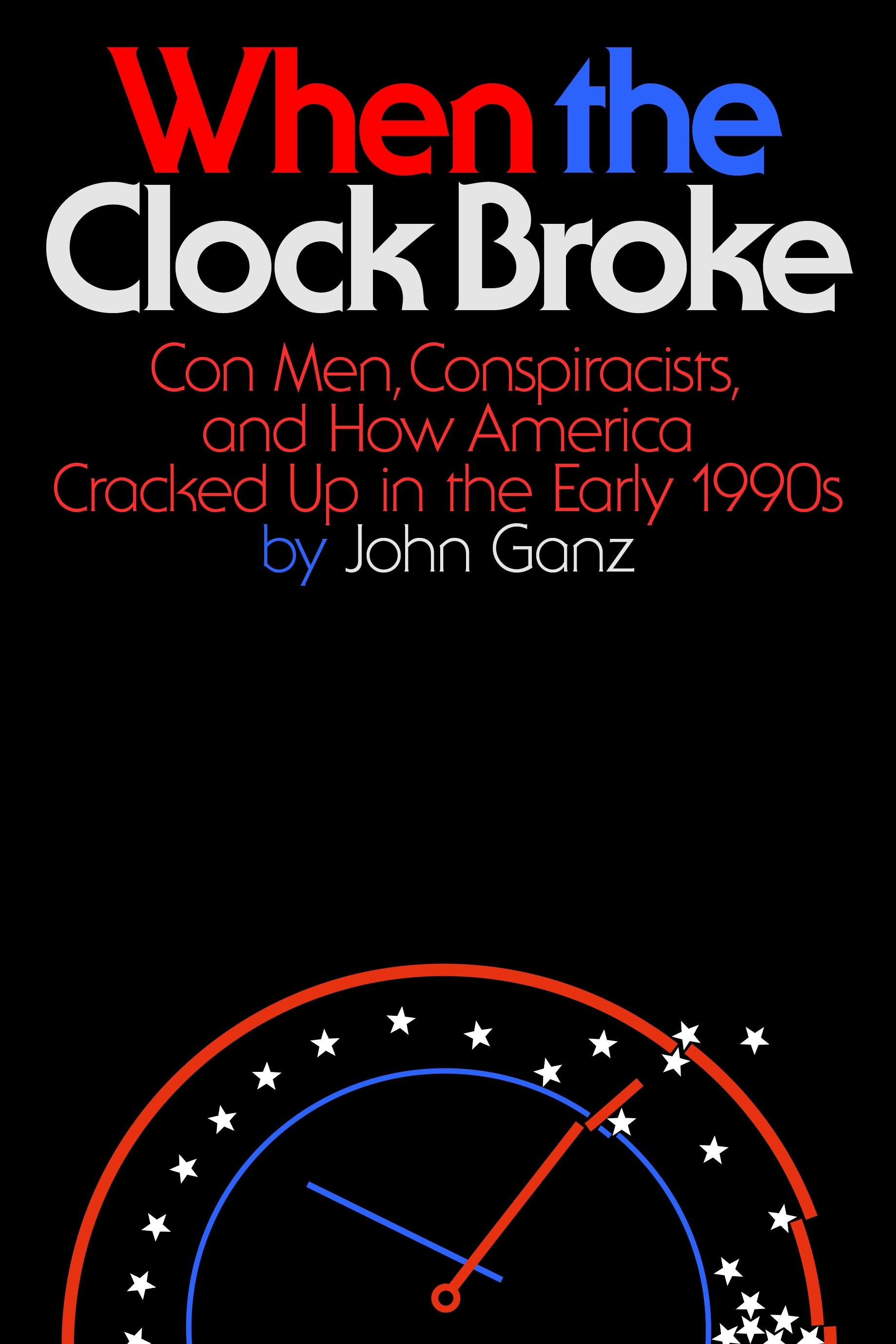
When the Clock Broke: Con Men, Conspiracists, and How America Cracked Up in the Early 1990s by John Ganz


Author John Ganz

John Ganz’s book When the Clock Broke: Con Men, Conspiracists,and How America Cracked Up in the Early 1990s is a timely and important book that covers various influential figures from the 80s and 90s who helped to shape much of the politics today. I didn’t realize how relevant and meaningful this book would be when I started reading it. Furthermore, as someone who grew up in the 80s and 90s, it was fascinating to learn more about this time period and gain a different perspective of some of the important events. I also learned more about the behind the scenes conservative wars between the neo-conservatives and the paleo-conservatives, which on the surface, seemed petty and silly, but had some serious and concerning ramifications for us today. As Ganz notes in the introduction “the protagonists of this book envisioned another end. Sensing that America as they knew it was in peril, they hoped to recast American democracy around the ‘negative solidarity’ of knowing who you hated or wanted to destroy: this system would be based on domination and exclusion, a restricted sense of community that jealously guarded its boundaries and policed its members…” (3). At times, I had to remind myself that I was reading about events and people from the 80s and 90s and not the current climate. However, Ganz’s book provides a broader context to see who the current political bacteria infecting many people has been cultured and mutated over time. While the book primarily focuses on conservative political candidates from the 1980s and 90s like Pat Buchanon, David Duke, and Ross Perot, other more mainstream figures play meaningful roles, especially in understanding how some of these far right figures captured much of the populist energy and hatred and used it to push main stream candidates like George Bush I and Bill Clinton further right. Furthermore, Ganz’s book provides important social, historical, and economic contexts for understanding how and why people were so upset with mainstream political parties like the Republicans and Democrats. I appreciated his analysis in exploring the ways that the failure of Reagan’s economic policies (i.e. cutting programs, limiting worker’s rights, being pro-corporation/business) impacted things like the middle class and people’s ability to access economic and social equality. Ganz’s book made me think about how more recent efforts towards “efficiency” and privatization will impact the current political environment. It also showed how candidates and policy makers can largely seize on people’s emotional responses to issues to push their case. While I’m no fan of Bush or Clinton, it was surprising to see how the populism of both Perot and Buchanon largely drove the policies and pandering of the main candidates. In many ways, it explains why some current candidates have attempted to also “break the clock” and rather than moving forward and making progress, they seek to return to the past and pander to people’s nostalgia for a time that can never return.

Trump looms towards the latter part of the book, especially in the chapter about Gotti, which I was surprised would be in here. Furthermore, it was surprising to learn how popular Gotti was and that many New Yorkers considered him as a mayoral candidate in the early 90s, around the time he was convicted by Giuliani. Ganz’s reporting and analysis helped to show how racial events in NYC (and in LA in an earlier chapter) helped to influence the candidates and people’s perceptions of what the mayor should be. While I clearly remember the LA Riots and all that happened, I didn’t realize how Buchanon and other conservative politicians used these events to call for a return to more conservative values. It reminded me of 2020 after the murders of citizens like George Floyd, Breonna Taylor, and Ahmaud Arbery, the resulting anger and the failure to bring about change, as well as the how the politicians viewed bringing about order through force. There was no real analysis or reflection by leaders to examine what went wrong and how it could be prevented. It was interesting to learn more about the unrest in 1990s NY.

Although he only spent a chapter on Ruby Ridge, I found this subject to be incredibly fascinating. I remember this happening and read more about it in Martin A Lee’s book The Beast Reawakens, about the re-emergence of Nazism in America and Russia after WWII. Although it is kind of overlooked today, Ruby Ridge was kind of like a rallying point for White Supremacists and other government conspiracists who were distrustful of the role that the government played. Ganz shows how the events at Ruby Ridge would go on to later influence both Waco and eventually the Murrah Bombing in Oklahoma City. I also found it interesting that Bo Gritz showed up at various points in the book. In Lee’s book, he is like a connection between some of the militias that gave cover to domestic terrorists like The Order and Timothy McVeigh, but also managed to broker Randy Weaver’s surrender at Ruby Ridge (with the help of skinhead nazis). In Ganz’s book, Gritz also plays a role in trying to return POWs from Southeast Asia following the end of the Vietnam War, something that propelled Perot’s popularity and populism. Ganz relates some interesting stories about Gritz, but the whole POW speculation about soldiers left in Southeast Asian countries reminded me too of many of the action films from the 80s and how that kind of media and action hero fed into the pro-American jingoistic beliefs (and are still happening today).

Although this book was at times depressing (no fault of Ganz’s), it is important to read to gain an understanding how we arrived at the current political climate--or maybe how it never actually went away, but kind of lingered like bacteria in a petri dish, waiting for some kind of moist environment or pliant host to feed off of and infect others. In fact, Ganz's research and writing are detailed and incredibly informative. I really enjoyed the way that he connected events, characters, and social and economic conditions to explain the political implications and policies that resulted from them. While he doesn't harp on the issue, I could sense Trumpism's shadow cast over much of the conservative movement, and see how he has plagiarized from past movements and criminals to feed of people's pain and anger. If there is some hope, it’s about the cyclical nature of change that occurs, and how despite preying off of people’s fears and hatred, there comes a point where most people end up rejecting this ideology, although it might take another recession or economic downturn to eventually bring about these changes and rejections. Nevertheless, nothing stays the same and things are bound to change. Hope is the opposite of despair, and progress is a movement forward, not a nostalgic brace of the what can never be. As Johnny Thunders sang “You can’t put your arms around a memory,” and I’d like to believe that eventually people will realize the need to move forward and not backwards.  


Sunday, November 10, 2024

The Last Kilo: An American Tale of Success and Excess

 The Last Kilo: Willy Falcon and the Cocaine Empire that Seduced America by T.J. English

The Last Kilo book cover


Author T.J. English 

Sal and Willy, Los Muchachos


Many thanks to William Morrow Publishers and Netgalley for allowing me to read an advanced copy of prolific writer T.J. English’s new book The Last Kilo: Willy Falcon and the Cocaine Empire that Seduced America. There are several books by English that are on my to be read shelf, so I feel grateful that I was able to read this new book. Furthermore, I had some familiarity with Willy Falcon’s story from the Netflix documentary Cocaine Cowboys. However, as English lets readers know in the beginning of the book, he wrote this book with Willy Falcon’s collaboration and did not rely on the testimony of people who collaborated with the government as witnesses, in the ways that the Netflix documentary was created. This provides a unique perspective that may have some bias in the details. Nevertheless, English’s writing, detailed research, and ability to capture the scene of late 70s and 1980s Miami, specifically the Little Havana area, helps to add to the intrigue and action of Willy Falcon’s story (as well as his partner Sal Magluta and the other members of their gang, Los Muchachos). Just like other true crime and non-fiction books, English helps to contextualize the history and social scene of cocaine use in America in the 70s and 80s. He provides a quick history, and then pivots to explore how many Cubans ended up in Miami in the 60s, 70s, and 80s. I actually didn’t know about the Mariel Boatlift, a time when Cuba and America entered into an agreement to allow refugees to flee Cuba. As English explains, Castro was playing a game with the US, and released inmates and other criminals from Cuba’s prisons, sending them to the US. I wondered if this is possibly the source of some current anxieties over refugees from other Latin American countries. Although Willy and Sal arrived much earlier, their experiences fleeing Castro’s Cuba helps to shed light on the kinds of threats and violence they experienced as young children with their families. Furthermore, it makes their story of American success, using the front of several businesses to become possibly the largest cocaine smugglers in the US, more incredible. I was also amazed to learn that Los Muchachos got their start smuggling cocaine as part of the anti-Castro groups that emerged after the Bay of Pigs failures in the 1960s. That is, it sounded like Willy and Sal took on an existing role of drugs for weapons that predated the Iran-Contra affairs by at least a decade, and may have been going on for some time. In fact, I found Willy and Sal’s story of success incredible considering that neither of them graduated high school, yet they became successful business men and popular within their communities. I think their story also kind of sheds light on how some minority groups and immigrants don’t have the same kinds of advantages and opportunities that other citizens might have. Most don’t turn to illegal activities, but Willy and Sal saw this as their main opportunity to make money and continue to fight to liberate Cuba from communism. Their efforts and experiences raise some important questions about the nature of battling communism. While I don’t agree that bringing drugs into America and feeding addicts is the right way to battle dictatorships and ideologies we disagree with, I can see how their decisions to deal drugs were largely motivated by their patriotism and efforts to return Cuba to its pre-revolution days. English is persistent in showing readers that Willy and Sal regularly donated money to the cause whenever they were asked. I was actually surprised that they could still find the funds to support the liberation efforts even when they were being detained and had limited access to their funds. I also loved reading about some of the other traffickers that have shown up in other Netflix series, especially the Narcos series. I didn’t realize that Willy and Sal were that close with Escobar and some of the Sinaloa Cartel. It seemed kind of incredible to see how Los Muchachos had to navigate the relationships between different distributors of cocaine in Columbia, working with different cartels and trying to import the goods to America. It also showed how ingenious they were in subverting the DEA’s means of halting smuggling.

The Last Kilo is an exciting and fun read. Although the days of crime were action filled and entertaining, the last sections when Los Muchachos begins to fall apart was also compelling to read. English shifts from a crime story to more of a legal tale, exploring the various indictments against Willy, Sal, and many of their compatriots in Los Muchachos. It was amazing to read about the long stint that Willy and Sal spent in prison despite not being convicted of a crime. Furthermore, it was incredible to see the ways they were able to maneuver around the charges, and eventually find a plea deal to reduce their time in prison. Although English had access to Willy’s accounts, I felt like sometimes this book may have overlooked some of the crimes or the cost of addiction. Other books focusing on drug crimes often give the perspective of the victims of drugs—especially the addicts, and there’s not much about the cost of addiction in 80s. One of the pilots that Willy and Sal worked with did become addicted to a early form of crack, and Willy learns about the cost of crack, but he also seems somewhat indifferent to it, like his smuggling was not really resulting in all of the crack addiction, crime, and punishment that was a result of the failed war on drugs. If anything, Willy seems kind of oblivious to his role in furthering this dark period of American society that we are still dealing with. The book always seemed to go back to the idea of fighting for Cuba’s independence and using drugs as a means to subvert Castro’s Cuba, despite not really seeing where the money or weapons went.

I really enjoyed reading English’s book, and I look forward to reading some of his other true crime books. Although I haven’t read too many books about drug smuggling empires, I think that this one ranks with Mark Bowden’s Killing Pablo, one of my favorite and one of the more exciting books I’ve read. The one aspect of The Last Kilo that I felt could be better is the dialogue in the book. Some of the dialogue seemed a little stilted and didn’t quite have the sound that major drug smugglers might sound like—or maybe my ideas about their discussions may be more influenced by popular media like television shows and movies. Specifically, whenever Willy and Sal would talk to other dealers, it seemed like they were always kind of understanding. English also mentioned that they didn’t really engage in violence and often were forgiving of mistakes and issues. However, he does raise questions about the deaths of witnesses that occur while Willy and Sal are awaiting trial. English never directly implicates Willy and Sal, but it seems like they may have had a hand in some of these deaths. Regardless, this was a really fascinating story that covers a range of issues from crime and drugs, to immigration and American opportunities, as well as foreign policy and covert missions to combat communism. A really entertaining and compelling read. 


Saturday, November 9, 2024

The Funhouse- Trick Mirror Images of Families in 80s Slasher Classic

 Families in Hooper's The Funhouse (1980)

Tobe Hooper’s films, especially his early films, are ostensibly about family. Texas Chainsaw Massacre details a family pushed to the edge by modernity and economic fallout of failing to keep up with the means of production. We see how this family has sought to maintain its ways, keeping traditions, while also looking for alternative sources of sustenance. This family supports one another, and in a reverse, the kids are the ones who are training to sustain the parents (or grandparents), looking to maintain their lineage.


The Sawyer Family

Similarly, Eaten Alive follows two different families—one on the run and one following a runaway. The family on the run is engaged in a kind of pretense, using disguises to hide their criminal acts. The other family, a father and daughter, are looking for their lost daughter/sister, who seems to have disappeared, possibly finding a new family in a brothel. Although many may not see this as a legitimate family, the runaway has found temporary shelter and employment, yet we still see that she has people who care for her enough to try to find her. At some point in both films, the protagonists (or maybe the antagonists) commit violence towards these families. Hooper presents interesting critiques of families, possibly highlighting the disintegration of families and the failure of society and these kinds of American institutions to maintain the connected family. In another way, he also might be holding a mirror to identify how perverted and decrepit families in society have become—they must resort to crime, violence, and other acts just to maintain a semblance of their prior existence. It’s an interesting metaphor to think about, especially at the time of the rise of the moral majority in America. It could also be like a kind of reflection of what people were fleeing from in seeking autonomy and independence from their families in the 1960s and 1970s, also coinciding with what some developmental psychologists have identified as a new stage in human development – emerging adulthood. In both cases, we see the product of families, and how this kind of willingness and dependence on families creates a kind of ruin.


The great William Finley playing a father in Eaten Alive

The Funhouse is another film that deals with families, although it also presents a kind of mirror image or duality of families that also requires us to interrogate not only Hooper’s ideas, but also our own about the nature and dynamics of American families. The film starts almost as a copy of Carpenter’s Halloween, possibly another film about cursed families, where we take the perspective of a stalker and possibly a killer. We see the room, filled with weapons and masks, as the killer selects a tool and proceeds to the bathroom to attack a victim, a teenager taking a shower. As the killer thrusts the knife into his victim, it bends in a strange way, challenging our sense of what we expect from scenes similar to Psycho and Halloween. We find out that the killer is actually the girl’s (Amy) younger brother, Joey. Joey is a serious horror fan, and from Amy’s reaction and threats to lock him in the closet for doing this, it seems like this is part of the typical prank that Joey pulls on his sister. While Joey did seem to scare his sister, it seemed strange that he would want to pretend to attack his sister while she was showering. In some ways, it seems abnormal to invade her privacy, yet this is our first introduction to the Harper family. Amy was getting ready to go to a traveling carnival that is visiting her town with her boyfriend and friends. Before leaving, she lets her parents know about her plans, but they object, or at least her father does. Her mother is either drunk or anesthetized from the dull life of a suburban housewife. She seems completely out of it, staring at the television with little to offer. Amy’s dad vehemently objects to Amy spending time with friends at the carnival, assuming that his daughter will be up to no good. From these opening scenes, it’s clear that the family is dysfunctional; mom is like a zombie, completely devoid of any kind of personality or spark that shows her interest in the family. Dad seems to be controlling and suspicious of his daughters attempts at socializing. Joey, the brother, is locked in the closet after pretending to murder his sister while she showered.


Borrowing from Psycho and Halloween

Despite her father’s objections, Amy visits the travelling carnival with her boyfriend, Buzz. Joining along is Amy’s friend Liz and her boyfriend Richie. Both Buzz and Richie seem much older than teenagers, and they possibly bring about the bad luck that teens have in slasher films by not only encouraging Amy to lie to her parents, but also by bringing weed to the carnival. Like many traveling carnivals, there are some strange exhibits and attractions. The teens visit a freak show where they witness some natural wonders, like a two-faced cow, which we are unsure if this is the result of some kind of genetic anomaly or if it is possibly from exposure to chemicals in the environment. In either case, the teens are confused about how the feed the cow, yet are interested and repulsed by it at the same time. On their way out of the freak show, there is a jar with some kind of creature in it, preserved for all to stare at this freakish spectacle. I think that these kinds of jars with an unknown species are a part of freak shows. I visited the Coney Island show over the summer, and paid some extra money to visit the mysterious “What is it?” jar after the show. While I’m not exactly sure what it is and if the members of the troupe actually discovered the object in the toilet as they claimed, it’s definitely something to intrigue people (and make some money). Similarly, the crew stares at the creature in the jar, which appears to be some kind of baby creature, deformed, yet seemingly harmless. Like the cow, we aren’t sure if this is creature was created from a genetic anomaly or some kind of teratogen or environmental exposure, but it appears still and harmless, forever preserved in formaldehyde and used to extract money from the rubes. We will learn later that some members of the carnival have a stronger bond with this creature.

What is it? 

Preserved for all to witness


Two-faced cow

Other animal oddities

The teens also witness a magic show where the wonderful William Finley presents us with a magic trick that seemingly turns tragic. Following his turn as the psychotic bank robbing father in Eaten Alive, Finley takes on the role of a magician/father who seems to accidently murder his volunteer, but it is just a trick to scare the audience. He also reveals that the volunteer is actually his daughter. Once again, we see another instance of families putting their daughters in a kind of false risk, one where violence and death are simulated. Although the magician’s daughter is in on the act and jumps out of the trap, I wondered whether this constant exposure to violence maybe had some kind of effect on Mrs. Harper and wore her down. Regardless, the crew wonders around the midway, noticing that the barker from the freakshow looks similar to the barker they see at the peer show where the teens partake in a smoke session. I’ve been to a number of carnivals, and I’ve never seen a burlesque show at any of them, but hey, this was the 80s, so maybe times were different. The teenagers are unable to enter the show, but we see many older men being entertained by these dancers, and the teens are able to watch from an opening in the back of the tent. They actually use a knife to cut a hole in the canvas, which again suggests some kind of violence to witness these women dance for a large group of rowdy men. The teens also visit Madame Zena, the fortune teller, but the end up in a disagreement with her, and she seems to curse them. Madame Zena also seemed to haggle with them about money or something, so like the women in the strip show, Zena seems to struggle to make money.


William Finley in another Hooper film, playing Marco the Magnificent

Missing out on the teens, Zena looks to make money elsewhere in the carnival. The teens take a ride in a haunted house, where a car on a track takes them through some monsters and other scares that jump out at them. While unrealistic, the ride is creepy. Even creepier is the strange ride attendant who is wearing a Frankenstein mask and lumbering around, pushing the cars off to be scared and retrieving them for new riders. After exploring the ride, the teens decide to spend the night there, and Amy calls her parents to lie to them about where she is spending the night, another strike in slashers that can often bring about death. I’m also not sure why the teens would want to spend the night in the carnival, especially in the creepy haunted house, except to smoke more weed and have sex, which is what most teens in slashers do when away from their parents. It’s interesting to note that all of the teens seem to want to escape their families and would rather spend the night with animatronic clowns and monsters than the safety of their own bed. However, with Amy’s spying brother, who also snuck out to the carnival, it’s no wonder that this might be a more welcoming environment. The teens sneak a final ride on the funhouse car and jump out, hiding among the scares, while the Frankenstein man doesn’t ever notice that they don’t return. They end up above the ride, looking down through an opening on Madame Zena’s room, where they notice a strange scene. The Frankenstein mask wearing attendant is in Zena’s room, and she is negotiating a price for sex. She seems to be both selling her body, and also recognizing his need for human contact. He maintains his mask, but something about the scene suggests that they have done this before. As Zena gets close to him and begins to caress and hold him, the masked man makes strange noises, and Zena also recognizes that he’s arrived a little early. Although he won’t get to enjoy his ride with Zena, she refuses to return his money, and he ends up killing Zena while the teens stare down at the scene from above.


Zena and Frankenstein 

The teens are shocked and try to escape, but realize that since the carnival is closed, they are locked in the funhouse. They make their way down to the room where Zena is and take money from the safe where the masked man also took his $100. They then proceed to look for other ways out. The masked man returns with one of the carnival barkers, who are all played by the same actor (Kevin Conway), but who speaks differently and looks slightly different. I loved this choice, and apparently it was the actors decision to play the different roles of the barker. I didn’t realize that the same actor was playing 3 different roles until the 3rd one, and although there are some differences, it suggests that the carnival is a family. We already saw that the magician and his daughter worked to trick the audience, and that Zena seems to play both a mothering and seducer role to the mask wearing attendant. This 3 person role also shows that the carnival is so similar that it’s almost inbred. The teens move back upstairs, looking for another way out, only to witness the barker return. He discovers the money is gone and blames the masked man, who we learn is his son, Gunther. Enraged that the money is missing and Zena is dead, he proceeds to attack Gunther, removing his mask for one of the great reveals in 80s slasher movies. I loved that with this slasher, we already know the killer, but there’s something mysterious and strange about the mask and the animal like grunting that Gunther uses to communicate with Zena. When Gunther’s mask is removed, we know why—he is revealed to be deformed, much like the cow in the freak show. His eyes are spaced wide and his face seems almost split in two. He has fangs and appears to have albinism. We also learn that the creature in the jar was his brother who didn’t survive, and that the barker is his father, thus revealing the true familial nature of this carnival, where father’s exploit their children to make a living. Furthermore, the use of the Frankenstein mask is really interesting as well, since it suggests that Gunther is his father’s creation, just as Frankenstein’s monster was a creation. Whether or not Gunther and his brother were twins or whether his brother was maybe a prior birth that didn’t survive, we never learn, but we are left to wonder what kind of a father the barker truly is, and how exactly he brought Gunther into the world. Also, we are left to wonder what happened to Gunther’s mother. Like other women in the film, was she exploited? Was there some kind of violence done to her? Did she escape? Did she die? Gunther’s desire to be touched by Zena suggests that this kind of mothering was missing from his life. Nevertheless, Gunther’s reveal is both shocking and intriguing due to Rick Baker’s amazing effects as well as the acting of Wayne Doba, who doesn’t have any speaking lines, but brings excellent physicality to the part. Interestingly, I read that Wayne Doba was a mime, and I also found out that he is a tap dancer. His only other role was another masked man, playing Octavio the Clown in Scarface. I thought his acting was both menacing and animal like in this film.


Gunther, revealed

Gunther's father, who also plays 2 other barkers


I won’t get too much further into details of the film, but the teens drop something as they watch Gunther and his father in Zena’s room, revealing that the carnies are not alone. This sets off a cat and mouse chase to hunt the teens down to exact revenge and regain their money. Although the body count is not large like other slashers, the claustrophobic nature of the funhouse creates great tension. The deaths in the funhouse are also brutal, and Hooper brings the violence in much the same way he did with Texas Chainsaw Massacre and Eaten Alive. Although we don’t always witness the violence in person, we often see the aftermath, and the deaths are gruesome. Joey, Amy’s brother, is also at the carnival after closing, and he somehow sustains an injury. Her parents are called to pick him up, and as the final girl, Amy tries to call out to them, but no one can hear her over the fan. We see how her disconnection from her family is continued, and she ultimately remains trapped in the funhouse as an animatronic fat lady laughs to end the film, seemingly mocking Amy while also signifying the end.


Final Girl, Amy Harper

Although The Funhouse may not be held in the same esteem as other 80s slashers, it’s a great watch, filled with tension, gruesome kills, and an interesting monster/creation. I loved the carnival setting, since it adds to both the creepiness and the claustrophobia. Furthermore, I thought this film adds to the kind of disassociation of families that is a theme in other Hooper films. Although this film followed Salem’s Lot, his other features—Eaten Alive and Texas Chainsaw Massacre—both featured families that were complex—both supportive and problematic. The Funhouse features two contrasting families that are almost like trick mirror images of one another. There is the Harper family, the traditional suburban family who seems to have it all, but also experiences the metaphoric violence to women, through Joey’s attempts to play Norman Bates/Michael Myers and Mrs. Harper’s psychic disconnection which she drowns in her drink. Similarly, Amy seeks to run away, joining her friends and boyfriend at the carnival rather than staying at home. Despite the imagined horrors and threats, she chooses to spend the night among the animatronic threats, eventually discovering they are all too real. When contrasted with the supportive carnival family, we see that the Harpers appear more fractured and distant. The carnies are much closer (maybe too close), yet help each other out, even at a price. Throughout the movie, we also see how women are often exploited or absent, voiceless or victims of violence. Even when Amy becomes the final girl and survives the night in the funhouse, her parents fail to hear her voice, rescuing their son, and leaving their daughter to languish among the horrors of the funhouse.


Sunday, November 3, 2024

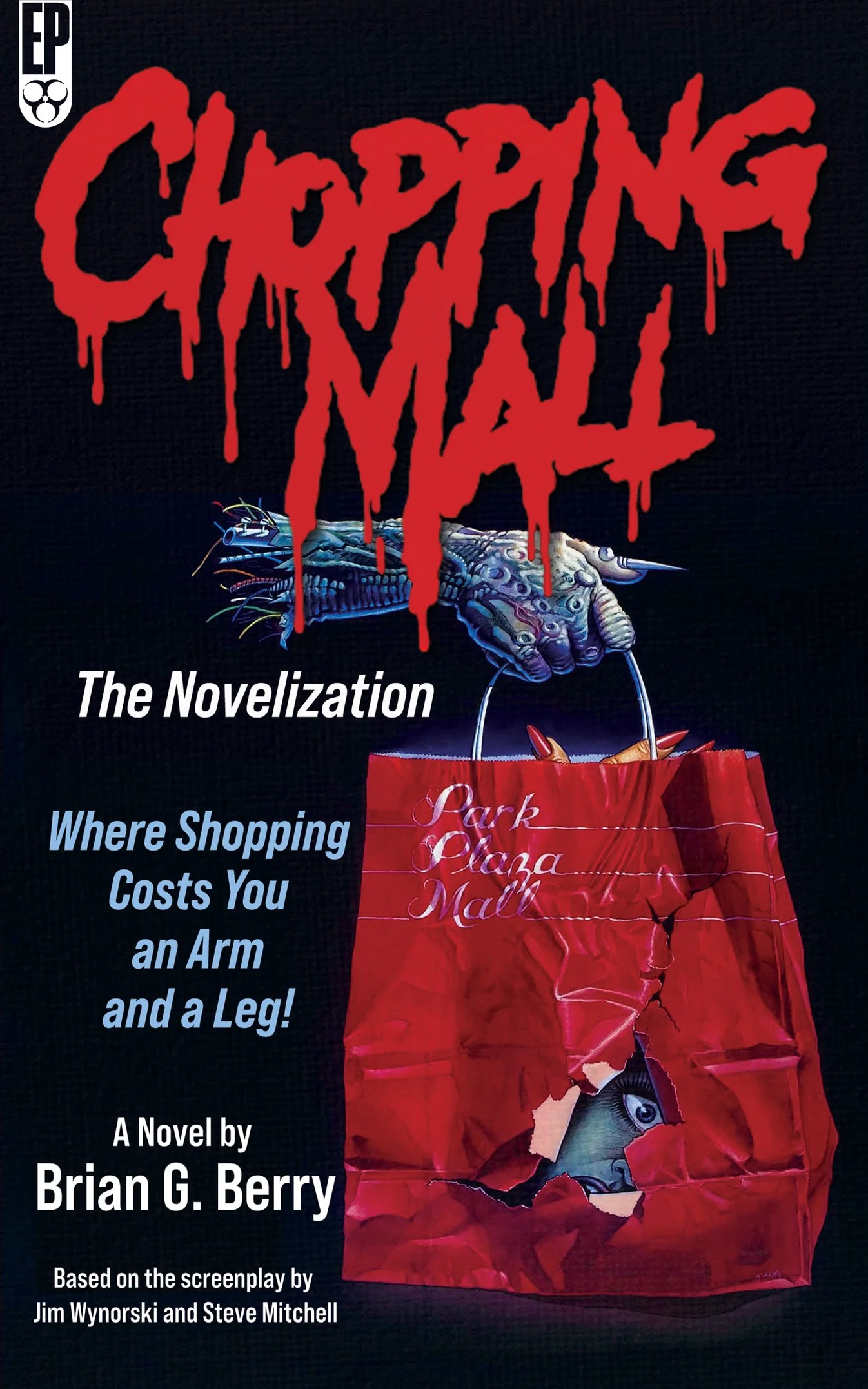
80s Techno-Horror Chopping Mall: The Novelization

 Chopping Mall: The Novelization 

by Brian G Berry


Author Brian G Berry (from X)

Protector Bot

Corman great and character actor Dick Miller as Walter Paisley

Big thanks to Encyclopocalypse Publications and BookSirens for allowing me to read an early copy of their latest release in their novelization series Chopping Mall: The Novelization. I was also able to preview the novelization of Plan 9 from Outer Space by Brett Nelson, and I really enjoyed the book. Furthermore, this is the third book from Encyclopocalypse Publications I’ve read, and they have all been fun, high quality reads. The movie Chopping Mall is an underrated 80’s techno-horror film, kinding operating as the antithesis of Short Circuit and building on the fears stoked by such films as Terminator. Although released before Robocop, I felt like the movie has some similarities with Chopping Mall as well since it presents a kind of corporate surveillance state where mindless commercialism and consumerism are intertwined with military technological surveillance and control. Maybe I’m looking too much into the subtext of the film since it’s also a fun and silly movie with some crazy kills and over-the-top gore and roboviolence. I feel like many people don’t know too much about this film, and I was glad to find out more as I researched it. I learned that the film has its DNA in Roger Corman’s productions, which is interesting since one of the couples who stays to party at the mall after closing watches Attack of the Crab Monsters and another character reads a book of short stories that features the basis for another Corman production Death Race 2000 (which also features Mary Woronov, who also has a cameo in this film). One of the stores in the film is also named after Corman’s Little Shop of Horrors and there are posters of Corman films throughout some of the stores. One of the great things about the book is that Berry includes many of these references throughout the novelization, but he also seems to add to some of the detaisl. For example, the janitor, played by the great character actor and Corman star Dick Miller, is, I think, the third person to die in the film. Berry names his colleagues Dick and Miller and kills them off too. I don’t remember their deaths in the film. There were a few other deaths in the novelization that I didn’t remember in the film—it’s been a while since I’ve seen it, and so I didn’t remember if Leslie’s dad was killed by one of the Protector bots—he was in the novelization, trying to spy on Leslie and Mike. Berry also adds some backstory to some of the characters that was entertaining. I loved his descriptions and background about Mike Brennan, explaining his interest in gum chewing that the film doesn’t really bother with. The novelization also has Paul and Mary returning to the mall to do something nefarious with their restaurant, not only a reference to the cameos from Paul Bartel and Mary Woronov, but also a reference to their film Eating Raoul. I loved these little nuggets including the reference to the sporting goods store as Peckinpah’s, which apparently was in the movie as well. I also found it interesting that a mall would have a sporting goods store with guns and other weapons, but this was also a major plot point for Dawn of the Dead so maybe that was something that happened more frequently in the 70s and 80s. The novelization stays true to the film, but in addition to the characterization, I also loved the epilogue. It was a cool twist, that I won’t end here, but it makes the protector robots more nefarious and part of a bigger plot. It also kind of opens the door for future movies or books about this robot program. I’m not sure if that will happen, but this was one of the great additions from the novelization. Beyond the epilogue, Berry’s writing also contributes to creating a fun read for fans of splatter and gore. The robot kills are described in graphic and creative ways. It’s over-the-top, but also kind of provides an imagistic description of what happens on the screen. If anything, his descriptions of the laser violence heightens the gore and splatter, adding a new dimension to this techno-horror gem. I found that Berry is a prolific author, so I will have to check out more of his works. I will definitely look for more Encyclopocalypse Publications. I really appreciate the preview copy, and I loved seeing the film stills and posters from the movie. I didn’t realize that the film had a previous title, Killbots, and was changed after it was unpopular at the time. I definitely think that Chopping Mall is a much better title and not only adds to the anti-capitalist message with other films like Dawn of the Dead and Carpenter’s They Live!, which would follow in a few years. The only thing I wish this book had was another introduction or preface by another author who also loves this film. Plan 9 had a great intro from Dana Gould explaining his love of the film and providing some context. I was hoping for a similar introduction to give some additional context to this film and the novelization. Hopefully, other books in the series will continue this tradition. Regardless, the book is still a fun and entertaining read, whether you’ve seen the film or not.

Saturday, November 2, 2024

Neil Gaiman's Coraline

 Coraline by Neil Gaiman

Coraline pulp fiction by Mike Baker CC BY NC SA 2.0via Flickr

Author Neil Gaiman by nrkbeta, CC BY-SA 2.0  via Wikimedia Commons


I just finished Coraline by Neil Gaiman, and I really enjoyed this book. The book was actually recommended for my son. His teacher noticed that he was reading “questionable” books, and this was one of the recommendations I put on hold through my library app. When the book was made available, I downloaded it and shared it with my son, but he was a little scared to read it. I think he thought it might be a horror novel. After reading it, I wouldn’t say that it was a scary novel, but it was definitely strange. The book is more like horror lite or pre-horror—something that I would have loved as a younger kid. I felt like this book shared some similarities with other books about kids on their own. The story is about Coraline, a young girl who lives with her parents in a flat that was a part of a larger house that has been renovated and divided into different flats. As an old, remodeled building, it has some oddities, like the door that goes nowhere. There’s also an old room that Coraline is forbidden from entering. These oddities and forbidden elements create a kind of mysterious tone, which allows Coraline to explore her environment during a week off from school. In some ways, Coraline reminded me of Where the Wild Things Are, where Max is banished to his room and ends up in another land where he has more agency and control over his world. Coraline doesn’t seem as angry or destructive as Max, but she does seem to want more from her world, questioning her father’s culinary decisions and seeking to learn more about her apartment building. One of the strengths of this book are the odd characters, especially the older women who live in another flat. However, the inverse or mirror world that Gaiman describes was my favorite part. It is so odd and creative, and creepy. I loved the way this world looked and operated. I read the interview with Gaiman at the end of this copy of the book, and it was interesting to learn that he initially wrote the story for his oldest daughter, but it never got to the page until his younger daughter was about the age of Coraline. He wanted to tell a creepy and odd story, but one that was ideal for younger children, and I think that this book really fits that bill. Coraline discovers a world behind her mirror where her other mother lives. She, like her other father, has buttons on her eyes, and desperately wants Coraline to remain in this world. Coraline at first seems intrigued, wanting to discover more of this world, but realizing that there’s not much more than the apartment building. In fact, as she discovers the other flats, they are filled with some strange and creepy elements. I won’t reveal them here, but Coraline’s quest to escape the mirror world and her other mother was the best part of the book, in my opinion. This was a quick and engaging read, one that wasn’t overly scary, but was incredibly creative and creepy, and enhanced by the great illustrations. I’m going to try to get my son to read this book, especially since he recently watched the movie. I would recommend this to both parents and kids, especially those who are looking for something on the odd and strange side. My only question about this book was the overall purpose. I realize that Gaiman was telling a story to entertain his daughter, but I also wondered if there was some other kind of moral or lesson to be learned. It didn’t seem as didactic as a book like Where the Wild Things Are or a movie like Home Alone, where Kevin feels excluded and wishes to be independent, but ultimately ends up appreciating his family. I think that Coraline’s experiences kind of awaken her more and she does appreciate her dad (and his cooking) more, but I wondered if I was missing a message in the story or not. Not all works need a message, and this was a fun and engaging story.


Reconsidering Time: Saving Time: Discovering a Life Beyond the Clock by Jenny Odell

 Saving Time: Discovering a Life Beyond the Clock by Jenny Odell

Saving Time book cover


Author and Artist Jenny Odell by Ryan Meyer

Ancient Water Clock Maahmaah persian tools, CC BY-SA 3.0 , via Wikimedia Commons

Kergeo, d'après l'image : Temple of Apollo (7238818732).jpg, CC BY-SA 2.0 , via Wikimedia Commons

The Oakland Columbarium Sean111111 at en.wikipedia, CC BY-SA 3.0 , via Wikimedia Commons

Memento Mori Master I. A. M. of Zwolle, CC0, via Wikimedia Commons

Big thanks to Random House and Netgalley for sharing this advanced copy of Jenny Odell’s revolutionary book Saving Time: Discovering a Life Beyond the Clock. While I acknowledge that the COVID pandemic and social distancing were truly awful experiences where we regularly witnessed illness and death in an unprecedented scale daily and were sometimes subject to horrid hording behaviors stoked by fears of access to daily products and goods as well as the uncertainty of the time, there were some elements of social distancing that I really enjoyed and appreciated. I really appreciated being able to spend more time with my children, who were 6 and 3 at the time. While working days and nights, I was often missing from school drop-offs and bedtimes and all the playtime in between. Weekends were often spent on other chores and taking the kids to various activities, so we also didn’t have much time to go to parks or take hikes around our neighborhood like we did when my kids were infants and toddlers. However, the social distancing (plus the need to get my kids out of the house) allowed a kind of slowing down where we were able to take trips to state parks around our area and explore creeks and other forested areas nearby. My kids got so used to visiting a creek in walking distance to our house that they named a snake they discovered and looked for it each time we visited the creek, sometimes more than once a day. Jenny Odell’s book starts off with a kind of similar observation about time during the pandemic and how the near stoppage of work time (or its disruption) allowed her to focus on natural developments and growth near her home. I could immediately relate to Odell’s observations, although I didn’t have plants or cacti in my house, I remember how my kids and I charted time and change at the creek, noting different ducks and how the plants flowered during the springtime. I also ended up spending more and more time in my home office, working from home in a converted attic room. This was always my space in the house—I moved most of my books and my record collection along with my stereo and record player to this room. However, when I was able to work in the office, I loved revisiting my records, especially some of the classical albums I neglected. I also loved the view and breeze that arrived from the 3rd floor in April and May. There was a tree nearby, and the room was filled with different birdsongs. While I don’t necessarily want to revisit the pandemic lockdown, I do appreciate that it allowed me some time to slow down, spend more time with family, and really closely analyze the growth and development, the changes happening around me.


When I initially requested this book for review, I was kind of expecting something of a self-help or primer about adjusting work habits or developing more self-care. I wasn’t expecting the kind of clarion call and critical analysis that Odell engages her readers. However, I was so appreciative of her stance in challenging popular notions about the hustle culture that pervades our economy and current times. Nevertheless, I needed to readjust my mindset to consider the critical approach and close analysis that Odell engages in throughout the book. I was not really familiar with Odell’s artwork, but from her writing, I can tell that she draws from a wide range of disciplines as each chapter regularly cites biology, sociology, economics, art, and psychology, among other disciplines. One of the more powerful chapters frames its analysis in disability studies, examining how our kind of western economic conceptions of time often fail to be inclusive and do not consider the experiences of those with physical or cognitive differences. Odell cites a parent and disability studies scholar whose experience raising a son with a disability challenged her conceptions of time and education, and helped her realize that learning is and can be an enjoyable experience that lacks the kind of stress or pressure to train and develop skills to be employable. Rather, she saw the joy and engagement that her son experienced in working with others and recognized that this was important. There were many other powerful experiences that Odell cites about people who maybe live outside of the clock—I’m struggling to come up with a term since she regularly cited the condescending and colonial-imperialist idea about indigenous people living “outside of time”, when really there concepts of time were not market driven. It was both enlightening and sad to learn that others like Native Americans and African Americans were often subject to a new concept of time, and frequently criticized when they failed to readjust their ideas and concepts of time to servile duties, and that these characterizations have often persisted despite being thrust upon these groups. Odell makes convincing arguments using the experiences of these marginalized groups why we should reconsider our conceptions of time, often slowing down or taking more time to explore the world on our own. Not only does her argument include being more inclusive, but she is also critical of the kind of hustler-striver culture that social media reinforces. The early chapters that are critical of this kind of concept of time that requires workers (and influencers) to always be on and reachable by email or other methods reminded me of some of Jia Tolentino’s criticisms in Trick Mirror, especially in the chapter that deals with the ideal woman. In fact, Odell thanks Tolentino in the acknowledgement section in the end, and their valid criticisms of how both technology and social media have disrupted our sense of time (and ourselves) are in synch. Odell, like Tolentino,  sees that we often get less from social media than it takes from us, and for Odell, this means we lose more than just our time; we lose more of our ability to look closely at the world around us. It alters our perceptions and many times our enjoyment of the world. It almost seems like social media warps our sense of the world around us, and we frequently will look to objects, experiences, and people around us as to what will drive more engagement and clicks on our posts. Odell presents important ideas and reconsiderations of time throughout the book, but this one of the more interesting and topical arguments she makes.

Odell intersperses her arguments with personal narrative and images she has collected. It seems like each narrative focuses on a journey she’s taken somewhere around the bay area, where she lives. In one chapter, it looks like she is outside the Meta campus, exploring the natural area around, but also recognizing how the buildings and development of Silicon Valley have altered the natural beauty of the environment. In another chapter, she describes a shipyard and the vast shipping containers that both contain many of the items we depend on for our lives on a daily basis, but also serve as impediments to the fauna around the port of the bay area. It was interesting to see how these animals have somewhat adapted to the presence of all of these large metal containers. The last chapter has her in a Columbarium, which I found out was a building that holds the urns of the cremated. I loved how this was the last section, and it sounded like a really interesting concept—that the urns were often shaped like books that would never open. It seemed like a kind of memento mori, but also an idea about the ways that our concepts of time have been set for us from birth (at least if we are born in western capitalistic systems). Yet living within this system for all of our life, it really doesn’t seem to matter much in the end.

Odell’s book has really challenged the way I think about time, not only how I spend my time, but also what I value in my life and what I value for my children’s time. There’s been other instances of Odell’s arguments about time—especially thinking about Cathy Davidson’s “Project Classroom Makeover”, and how US schools have largely have operated under the same system for the past 120 years (if not longer). Much of our education system is based on the factory model, and reminding us of why we have separate classes and bells to signal when to be in what place. Schools operate under these behavioristic principles to train students to be workers, not really thinkers. It’s great that Odell, as an interdisciplinary artist, is able to take these fragments and pieces from so many different sources and bring them together to challenge this dominant way of thinking. I can tell that she is a teacher, beyond her references to her classes and the challenges of assessing art work, Odell uses the stories and examples from different disciplines to not only highlight elements of her argument, but also to appeal to different groups of people, helping them recognize the broader application of this challenge to economic time keeping. I also loved that she referenced the two different types of time in Greek—the Chronos and the Kairos. She uses these two words to emphasize the difference in considering time and to make the argument that we’ve gotten too far away from the Kairos, the consideration of the right time or the critical moment for action and are too focused on the chronological concept of time as a sequential unfolding of experiences. Although I recognize that this book may be challenging and somewhat controversial to some, I am going to recommend it to others. This was the kind of book that upon finishing, I wanted to tell my wife and others close to me about it, to recommend it, and to discuss it further. I would love to see how teaching one of these chapters might work for undergraduate students, helping to challenge their concepts of time and how we spend our time and what we value. I don’t think that Odell takes a kind of all-on-nothing stance, as she recognizes that this kind of dominant system of time is not going away. Rather, I really appreciated her consideration of alternate and more natural ways of telling time that seem to be more in synch with nature and the surrounding world. Plus, it allows us to stop and consider our relationships with our environment, not treating everything as something to use or gain, but rather as something to appreciate and share.