Showing posts with label dystopian. Show all posts

Saturday, June 21, 2025

Memory, Class, and Food in a Modern Magic Mountain

 Land of Milk and Honey by C. Pam Zhang


Land of Milk and Honey book cover

I previously read Zhang’s How Much of These Hills is Gold, loving the story, characters, and how she used memory and trauma as a way to heal the wounds of the past. Land of Milk and Honey also has to do with memory and healing, but is also seems like more of a modern statement in dealing with and managing the kind of collective trauma we have lived in the past few years due to the COVID lockdowns. The book is much more than that, and I really enjoyed Zhang’s exploration of race, gender, class, and identity. However, the premise focuses on the narrator, a chef, who gains the opportunity to serve as a private chef for an exclusive group who manages to escape the smog and pollution that have basically eliminated sunlight and prevent food from growing. While she initially views this as an opportunity for which she may not be experienced (she somewhat exaggerated her resume), she comes to realize that the father and daughter for whom she works hired her for seemingly other reasons. It’s interesting to read about someone gaining an opportunity to advance professionally and have access and opportunities to perfect their craft, but yet, still be viewed as a kind of stereotype. I really liked that the narrator struggled with this, yet also seemed to take advantage of it at times. This is an excellent book that will challenge readers to think about their own identities, as well as how they might benefit from their statuses, and at what cost it comes to their identities. In addition to raising important questions about identity, class, race, and gender, Zhang also perfects the art of food writing, describing tastes, textures, and visuals in a descriptive way. I loved reading about the different dishes she created and the ingredients she used. I also think that like How Much of These Hills is Gold, the book also explores how trauma and memory (or -re-memory as Toni Morrison describes it in Beloved) shapes our perceptions and experiences in the present. The three main characters are all haunted by people in their past (mothers, wives) and how their mistreatment and regrets shape their own experiences and behaviors in the present. This is the kind of book I would like to revisit in a book club or to teach, as it is a well-layered book where I think a discussion with others might bring about other interesting aspects of the book. Looking forward to reading more from this amazing author. 


Monday, June 9, 2025

Cultural Critique of Cult Classic: They Live: Cultographies by D. Harlan Wilson

 They Live (Cultographies) by D. Harlan Wilson


They Live movie poster

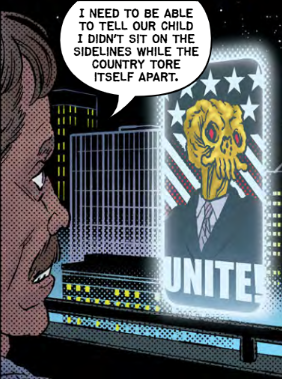
A view of LA from the Hoffman Lenses

I really enjoy these Cultographies books since they focus on cult movies and provide useful insights and analysis on some films that are often underevaluated or underappreciated. They Live, although it has gained cult status, is probably one of those more underappreciated films. Yet, with the continued escalation of conservative values and the push for conformity online, it is only fitting that They Live has a new analysis since its messages and iconic symbolism can be applied to today’s context to better understand forces in power and the means with which they communicate using media, advertising, and imagery. However, Wilson’s book goes beyond analysis and presents a historical context as well as important background information for understanding Carpenter’s film made in the late 80s, but developed from a story from the 1960s and a comic adaptation of that story from the 1980s. I knew about the story, but didn’t know about the comic, which included the main character of Nada, an everyman who is seemingly nothing in this new society dominated by conservative young professional values of working, consuming, and reproducing. In addition, Wilson provides his own personal connection to both Carpenter’s films as well as the excess of the 80s and how professional wrestling and masculinity factored into the development of They Live. I was also a big WWF fan in the 80s and remember how Roddy Roddy Piper stood out among the various villains and heroes. And while Piper’s acting is not great, it is surprising that based on his wrestling antics and skits, he wasn’t considered for many other leading roles in films. The book then examines different elements of both the film’s plot and its style, helping to frame both the cult legacy of They Live along with its messages and criticisms of Reaganism and the greater push for conservative values in American culture. I found this interesting, especially since Wilson explains that this was probably Carpenter’s last good film (some might say In the Mouth of Madness from the mid 1990s), and part of this might be that once Reagan left office, tastes for horror and sci-fi changed. There were fewer allegorical or critical horror and sci-fi films that were lower budget, and it probably wasn’t until the Matrix, which really wasn’t political, that a sci-fi film had that kind of allegorical or symbolic approach. I can also think of Fight Club as being critical of society, but I wouldn’t call that a cult film like They Live, and it is definitely not a sci-fi film, even though it tends to critique some of the concepts about masculinity, capitalism and consumerism. Regardless, I think Wilson’s analysis made me wonder whether the studio system and the changing dynamic of audience tastes may have prevented Carpenter from making the kinds of films he wanted. It’s not that his films went out of style—they seem even more relevant and popular today than they were when released; however, it seems like the studio system, part of the messaging and consumerist system that Carpenter critiques in They Live, was unwilling to pursue some of these allegorical approaches to films. That’s why I appreciated this analysis and contextualization of They Live. It challenged my thinking about films from the 80s, but also helped me reinterpret elements of They Live that are still relevant today. Furthermore, as Wilson notes from the various reviews and criticisms of the film from its release, They Live was really not well received, with only a few critics recognizing its cult status and B-Film references to 1950s alien films that similarly criticized McCarthyism and the red scare. I also greatly appreciated that this book went beyond a critical recap of the action of the film and looked at several elements surrounding its production, legacy and symbolism. Although he references Lethem’s critical recap, Wilson’s analysis is deeper and more nuanced, although maybe not as humorous as Lethem’s. I’m glad I read this book since They Live is a fun, yet also critically important film, and this book adds to the critical discussion, helping me think differently about the film and its legacy. 


Friday, May 16, 2025

More EC Horrors: EC Cruel Universe Vol. 1

 EC Cruel Universe Vol. 1 


Image from the story "The Ink Spot Test"

One of the covers from an issue
from "We Drown on Earth", and particularly Lovecraftian
From "By the Book", with a timely message about the hidden agendas of politicians

Big thanks to Oni Press and NetGalley for providing me with an advanced copy of their second EC relaunch Cruel Universe Vol. 1. I read a version in the NetGalley reader, and was primarily reading them on my iPad, which provided a great viewing experience, since I was able to see larger panels in vibrant color. I am really enjoying these reboots. Although sometimes I feel like these reboots and updated versions lack creativity or imagination, I think the stories in both EC Collections (Epitaphs from the Abyss is the horror themed, Tales from the Crypt version) are unique and present some modern takes on horror and technology, while also maintaining the ironic twists of fate that are a part of the original EC comics. While the Epitaphs from the Abyss was more of a horror themed set of stories, this collection was focused on science fiction and a kind of dystopia. I initially thought this would be strictly sci-fi, but there are stories that are horror themed and also feature the kind of cosmic horror that is in the vein of H.P. Lovecraft. Throughout all the stories, the artwork is great. I noticed in a few stories, there are some common themes in some of the outcomes to individuals in the stories, and I was surprised at the level of gore for a sci-fi collection. However, as the title indicates, these tales are part of a Cruel Universe, where people are subject to violence and brutality, as well as the whims of fate. In really enjoyed the space themed stories and those with aliens. I thought the artwork for these stories was particularly striking and original. Many of the aliens captured the kind of Lovecraftian image of Cthulhu, with tentacles and octopus-like appearances. One of the earliest stories, “Solo Shift”, features an interesting image of a black hole with really great colors. I also liked the kind of socio-economic themes that ran throughout stories like “Priceless” , “Organic”, “And the Profit Said…”, and “Paring Knife”, which all deal with people on the fringes of society or who are subject to a lower social ranking than others. In these stories, there is some kind of ironic twist at the end where we see how those with power maybe are not as powerful as they once seemed or their arrogance brings about a downfall, akin to hamartia in Greek tragedy. Other stories tell of the dark side of technology, and some are particularly relevant today. “Drink Up” was a unique and short tale about a rich man’s quest for immortality, as was “Billionaire Trust”, which had a particularly interesting ending. “Automated” was the story of a tech titan and car designer who brings about the destruction of society with his overreliance on automation (sound familiar?). I also really enjoyed “The Deleted Man”, which shows the lengths that people may go to in order to have their online histories “altered”. Two other favorites were “We Drown on Earth” and “The Ink Spot Test” for their creativity and illustrations. “We Drown on Earth” was especially Lovecraftian, but also focuses on the kinds of risks and problems that corporations exert on their workers. The creatures in the story are particularly creepy and well-drawn. I loved the background art in “The Ink Spot Test”, and the story is somewhat similar to a book I just finished on MKULTRA. I also really enjoyed the covers presented at the back of the book. There were some awesome illustrations there as well.

Overall, this was a great collection. I really enjoyed these stories, and most of them were great with unique and innovative twists and timely stories that are relevant to our current climate, and yet still maintain an element of that classic EC twist of fate. Highly recommended!


Wednesday, February 26, 2025

Navigating A Brutal and Catastrophic World: The Unworthy by Agustina Bazterrica

 The Unworthy by Agustina Bazterrica

The Unworthy book cover

Author Agustina Bazterrica

Scene from Ken Russel's 1971 film The Devils, about madness within a cloistered convent. 
Bazterrica's book reminded me a little of this film. 


Many thanks to Scribner and NetGalley for providing me with an advanced copy of Agustina Bazterrica’s new book The Unworthy. I was drawn to the nun on the cover and the story about a mysterious convent called the Sacred Sisterhood that borders on a cult. I was also curious about this book due to Bazterrica’s popularity from her book Tender is the Flesh. Although I haven’t read that book, I know that the book was widely popular especially during the early days of the pandemic. I was a little intimidate by the topic of cannibalism, but this book about fanaticism, religion, and cults seemed more up my alley. The first half of the book doesn’t disappoint either. The narrator is surreptitiously writing in her journal at night, detailing the arduous and tedious events of life in this mysterious convent. These early sections detailing the challenges she faces in trying to document the austerity and brutality of the convent are enthralling, but also hard to read. Along with translator Sarah Moses’s artful and descriptive language, Bazterrica creates a terrifying and gruesome world that seemed to exist in some medieval nightmare realm where madness, depravity and cruelty ruled people’s lives without much explanation or hope. I found the different levels of devotion fascinating as well—some members who seem to be pure and untouched are thoroughly mutilated, having their eardrums ruptured or their eyes shown shut to further feel the sacred and beatific emotions of the true god. These moments and their descriptions are brutal and horrific, and I was really amazed at the various methods that Bazterrica developed to further torture the members of the sect. I wondered whether these were invented or if they were based on research. Furthermore, the narrator describes the different areas in and around the Convent, and the mysteries they hold. Interestingly, she often crosses out words and phrases in the book, and I wasn’t completely sure why, especially if this journal is hidden from others, with no real hope of anyone reading it. This choice does create a sense of mystery, and I have my theories based on later events in the book. However, Bazterrica also creates a sense of both mystery and dread about the different areas in the convent, and we learn that she entered the convent, like many other women, as a wanderer. These are often strangers who have made it through the ravaged, apocalyptic landscape to this seeming refuge where there is shelter and seemingly those who could help. However, due to a kind of virus or plague, those wanderers often have to spend some time in the Cloister of Purification, where the members can see if these wanderers are carrying the plague. Other areas like the Creek of Madness or the Tower of Silence also offer some ominous warnings based on their names, and I loved how mysterious and dreadful these places seemed.

Yet, all is not as it seems, and the narrator also describes the kind of jealousy and tribalism that slowly boils within the confines of the convent. In particular, a new wanderer who arrives arouses something in the narrator, eventually forcing her to unearth her long-buried memories of her life before the Convent. While this second half of the book was compelling and created a kind of twist I didn’t expect, I also felt like it wasn’t as descriptive and developed as the kind of world building she did for the establishing the kind of frozen world of the Convent and the brutality that the initiates faced from the Superior Sister. I won’t detail the twists, but it was surprising and it did hold my attention. If anything, I think this book offers a powerful lesson for how we respond to both tragedies (or catastrophes) and authority, and sadly how these two things are often linked in our society. I also think that The Unworthy is a powerful reminder of how we often lose our freedom and sometimes even our will when catastrophic or tragic events occur. Whether we look for meaning and leadership or whether we retreat in fear and sorrow, the book is an important reminder of the need to persist. I also think there is an important message of love and connection, and how we need to maintain these kinds of relationships in these challenging and often brutal times. Reading and stories also play an important part in sustaining the narrator. She seems to feel a sense of relief in sharing her story, and when she recounts her past life before the convent, she shares how important other stories are to her and those she loves. I also really loved this aspect of the story, and how when we face tragedies, challenges, or catastrophes, we can find some solace in reading and writing. I know that this book is not for everyone, and in looking at reviews, I can see that the book is somewhat divisive. However, I appreciated the book, and I thought it was a compelling read. With the brutality and drudgery of the narrator’s life, it’s hard to say that the book was enjoyable, but I did engage with the book and found her story enthralling. Reading this book reminded me of the kind of brutal world that Ottessa Moshfegh created in Lapvona, where elements of folk horror are mixed with a cruel society and leadership that relies on brutality and fear. 


Sunday, December 29, 2024

Mindless Consumerism- Analyzing Dawn of the Dead (1978)

 Dawn of the Dead (Devil's Advocates) 

by Jon Towlson

Dawn of the Dead book cover

Author Jon Towlson

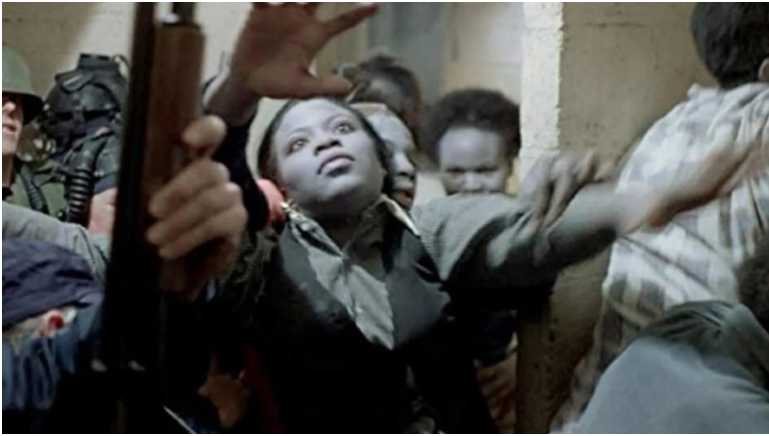
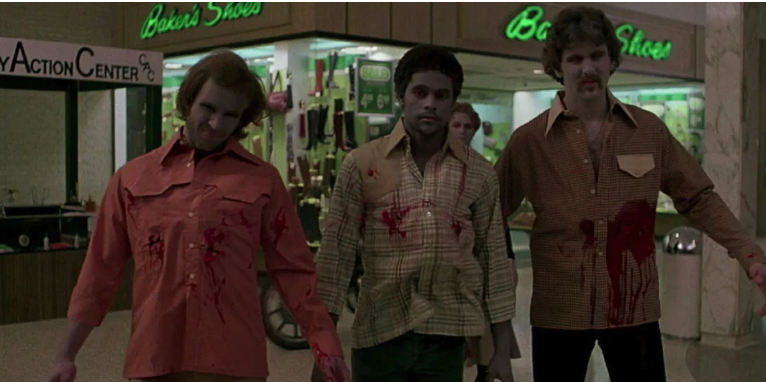
Zombies from Dawn of the Dead

Zombies or typical shoppers? 

This was the first Devil’s Advocates book I’ve read. I’ve managed to pick a few up, but I chose Jon Towlson’s Dawn of the Dead because I recently watched this film as well, so I wanted to read about it while it was fresh in my mind. I also love George Romero movies, even if Night of the Living Dead remains one of the scariest films I’ve ever seen. His other Dead movies are not as scary, but remain nearly as important for their use of horror as social critique as well as Tom Savini’s role as the wizard of gore. As a brief recap, Dawn of the Dead is Romero’s second installment of the Dead series, and it follows his other horror films The Crazies and Martin, both excellent and strange horror films that stand apart from much of what other directors were doing. Towlson’s book explores part of the reason why Romero spaced his Dead films apart, and how this film in particular took shape. As Towlson documents in this book, the Dead series was part of a trilogy that explored the collapse of society due to some strange space event that resurrected the dead. The survivors band together in a remote farmhouse, and try to re-create a new society as the old society collapses. While the farmhouse changes, Romero ends up using a mall to highlight the new world order of consumerism and capitalism to show the mindless consumption that has been a part of the post-war order. Furthermore, this kind of distraction or retail therapy can been seen as somewhat escapist, showing how it serves as a kind of bread and circus to keep our minds off of more of the post-Vietnam/Watergate world that was the mid 1970s. Towlson’s book helps to contextualize these events in exploring how Romero’s original screen treatment evolved to explore this aspect of society. As I watched the film, I couldn’t help but notice how many of the zombies seemed like normal shoppers, shuffling along from store to store. Similarly, the band of survivors equally looks to take advantage of the mall to not only gather supplies for survival, but also to treat themselves to luxuries and dinners that they might not have been able to afford prior to the zombie apocalypse. One interesting note was that this mall had a sporting goods store where the survivors could find weapons and ammunition. I’m not sure if this was a part of other malls, but a similar store appears in the 80s mall survival film Chopping Mall. It seems strange that malls would have these kinds of stores, but maybe it was also just a plot point.

In any event, Towlson’s book also looks at several other important elements of the film, importantly the extreme gore and violence and its impact on the eventual rating. Other chapters look at the various versions of the film, which I wasn’t aware of how many different edits and cuts there were for various reasons, including censorship and attaining appropriate ratings, as well as for cultural reasons—like the edits for other countries that adjusted the pace and narrative, making this more of a thriller/action film as opposed to a horror film or social critique. Towlson’s research and analysis also presents interesting considerations about the ratings system and distribution at the time, and how revolutionary and risk taking Romero really was to bring his vision of gore and violence to American screens. Initially issued an X rating due to violence, he decided to keep his vision and move to an unrated version. Despite backlash from some audiences and groups, Romero knew that there was an audience that demanded more extreme violence and gore, and furthermore that this kind of film aesthetic was not gratuitous nor exploitative, but rather served a purpose in calling attention to issues in society. In fact, the opening scene in a Philadelphia neighborhood that tries to protect the zombies in its homes, yet is destroyed by a police-military faction that seems racist could almost serve as a predictor of the MOVE bombing that happened about 6-7 years later. I really appreciated learning how much of a challenge Romero faced in bringing his vision of American violence and consumerism to the screen.

There are a few other chapters that focused on the production of the film, which is also really interesting since Romero used a lot of local actors as the extras, which is something that his films are usually known for. Some of the same actors show up in other films, and others have gone on to have roles in other horror films. However, it was interesting to learn about how Romero was able to use the mall to film such iconic action sequences, even when the mall was still used for shopping. Although more of the focus is on the mall scenes, I also really enjoy the opening sequences, especially when the media presents the military and experts discussing what they think should happen. I suppose this is part of the collapse of society, that communication is not clear and there are vying perspectives about how to proceed, some offering misinformation, while others are offering bad information. It is similar to scenes in Romero’s The Crazies, and I think it also highlights another important theme in his work about the role of the media and “experts” or “authorities” in corralling the masses. There was also a great afterword about the use of music, and how the music and sound editing changed with different cuts of the film. I watched the original extended cut, with the odd Muzak at the end and the odd polka type music in the zombie killing scene in the middle of the film. It was interesting to hear this interpretation of the film and its use of music, and I think it fits with some of Romero’s other ideas and concerns regarding the themes of these Dead films. I really liked reading about this film  in particular, and I hope to find more analytical books about zombie films. They are some of the scariest films to me—not the zombies necessarily, but being trapped and witnessing a collapse of society. I’m not sure if the books deal with this, but Towlson’s book does a good job exploring some of the origins of this theme in Romero’s Dead films.


Tuesday, December 3, 2024

Raising Questions about How Digital Technology is Impacting Our Humanity

 Our Language Gene: How the Cyber Era is Changing Our Humanity by Dan Appleton

Our Language Gene book cover

I definitely did not expect that ending, especially since I chose to read this book because I thought it would be about language and technology. Thank you to NetGalley for an advanced copy of Dan Appleton’s book Our Language Gene: How the Cyber Era is Changing Our Humanity. In many ways, the book is about technology, but rather a dark kind of position about the negative implications of technology, especially the internet. However, the book’s position on language is much more speculative, and I found it rather challenging to follow what the author was trying to accomplish. Towards the end of the book he writes “My aim is to explain what makes us who we are and how that is changing what we are. Some will receive my messages as information and others as noise. I leave it to you, my reader, to decide if my story of the human paradigm is fiction or nonfiction. I, for one, do not know.” I agree, that it really didn’t seem if there was a clear position taken. For me, this book was mostly noise, and even before reaching the end of this book and reading these lines, I was thinking that this books seemed more like a speculative science book and not any kind of thesis rooted in facts or research. Thinking back, it is rather hard for me to try to summarize the points made in the book since it speculates widely and moves from various topics and ideas without really connecting them or trying to unify the points.

The book is divided into two main parts. In the first part, Appleton presents the development of language, but rather than looking at say linguistics or physiology, he examines physics mostly as the means through which language developed. There is some biology thrown in there, as he mentions genetics and DNA, but it seemed like the focus was on photons and atoms, and how our perception of light creates edges that we need to smooth out and give name to. It’s interesting to consider, but Appleton does not really provide much evidence to support these ideas. Some scientists and authors are mentioned, but there are really no citations or data in the book at all. I was expecting more evidence to support the points. Furthermore, I found it rather strange that a book about the development of language doesn’t really mention anything about socialization, education, or even really get into how written forms of language helped to preserve and codify rules that were transmitted along different generations. Although my background in education may predispose me to think about how significant education is in fostering language development, I was really shocked that this was not mentioned at all in the book. In addition, some of Appleton’s claims about language development in humans are questionable as well. He mentioned that in utero babies do not think :”While human babies may exhibit rudimentary thought events, they do not reason in the womb. They have nothing to reason with. They have no language. One can only assume that the cellular structure of language is chemical reactions to external electromagnetic stimuli. These external stimuli are actually the edges of photon wavelengths …” However, there is evidence that in utero babies recognize their mother’s heartbeats and voice when they are born (Brown Wright, 2014). I was surprised by Appleton’s claims that children have no reasoning at all, and that photons and wavelengths are what help to bring about their reasoning. In addition, his claim that expressive language, which for Appleton is what makes humans unique, is predicated on sound “humans need to create sound. We do this by moving air through the larynx. Then we need to shape sounds into vowels or consonants in our mouth… Articulation, moving thoughts into precise speech sounds, is the fuel of reasoning and the creation of “rational thoughts.” However, it made me wonder about people who do not make sounds. There are plenty of people who are incapable of making sounds yet have the capacity for expressive language. I’m not sure that this claim holds up.

In addition to speculative science, the writing for the book was hard to follow. Appleton takes ideas and “paradigms” (to borrow a word he borrowed) from other writers and thinkers and recasts them in his own meaning or renames them for his own purposes. This makes the reading difficult to follow. Other sections contain difficult sentences: “Relationships further elaborated the Sea’s language, because it told sapiens that one tree could be many trees, many could one, and many could be many”. What? I struggled to make meaning of some of these sections, and as a result, this part came of much like noise to me—Appleton’s binary designations of language messages—either information or noise, which is incongruous and painful to our understanding.

However, the second section focuses more on technology’s role in forcing us to receive noise, but also altering our perceptions to make us enjoy the noise. I also found some disagreements with this section as well. Appleton’s main argument is that the internet has evolved from a means of communication to an information database, which is controlled largely by “rich nodes” who seek to change our ways of thinking. They do this largely through altering information, taking noise and making it into information. That is, he seems to say that much of what we encounter online is contrary to what we think or believe, or are our realities, and as a result of this constant barrage of “noise”, we end up shifting our mindsets/perspectives to accommodate the difference. In some ways, I can see how this is like cognitive dissonance, and that often when we encounter dissonance, we might tend to latch onto our beliefs. However, as Solomon Ash’s studies of conformity show, when there are large numbers pushing against us or when there are also social forces, like peer pressure, we may sometimes give into the dissonance and accept what we do not always believe or agree with. I think that this is what Appleton is saying with the internet. The forces are so large and pervasive that there is like no escape from the messaging, and we tend to make the noise more accessible and amenable to our senses because as humans, we want to make meaning and gain information. However, I don’t think that we have to merely accept everything we encounter online, nor do I think that everything online is always noise or information. There is entertainment, there is art, there is communication. The internet has brought about positive changes beyond merely information. Furthermore, I think that the ease of access to information can be helpful, but we must also better prepare younger generations to be more selective and cautious in accepting the information they encounter online. That is why information literacy is so important, and again, why the roles of schools and education are necessary to promote better understanding of information and internet use. In addition, Appleton presents the scope and reach of the internet as one of its biggest threats, frequently mentioning that the 8 million people on the planet will have their minds controlled by the forces that control the internet. However, not everyone has access to the internet, and even those who use the internet may not have regular or reliable access to it. A quick check of the data suggests that a little less than 70% of the world’s population (nearly 6 billion people) use the internet, and even fewer than that number are users of social media. Thus, I think it is necessary to remember that while most industrialized countries will use the internet to advance their standing since digital technology and communication seem to be the future, it is also important to remember that even within these countries, there still remains a divide where people will be left out. Although I think that Appleton raises some important concerns about our reliance on digital technology and our use (or overuse) of it, it is also important to remember that not everyone is using it in the same way, and not everyone is impacted negatively by it. Like other tools (or drugs, as Appleton mentions several times), digital technology like the internet can have benefits and drawbacks. It is not necessarily inherently good or bad, but really the outcomes are based in how we use it. While I’m sure the internet is impacting our language to a certain extent, this book doesn’t really get into the linguistic implications of the internet, considering whether we are communicating less or more, or whether our vocabulary use and grammar have changed as a result of things like texts or emails. I thought that might have been the focus of this book, but it was not. Alas, Appleton suggests that there are implications, but it is more about mind control and the disintegration of an “I” individual at the hands of several power brokers who seek to control the internet. I’m not sure that I am there. I do recognize that corporations and other influential groups do manage much influence over our information, but hasn’t this always been the case? I credit Appleton for some unique and thought provoking ideas that I would never have considered; however, I also question his capitalistic-centric and industrialized-centric mindset, assuming that the entire world is always online and passively accepting whatever information they encounter. If anything, Appleton’s ideas are a reminder that we must continue to push for more information literacy in schools and continue to push students to question and evaluate the information (and noise) they encounter online and elsewhere.


Sunday, November 3, 2024

80s Techno-Horror Chopping Mall: The Novelization

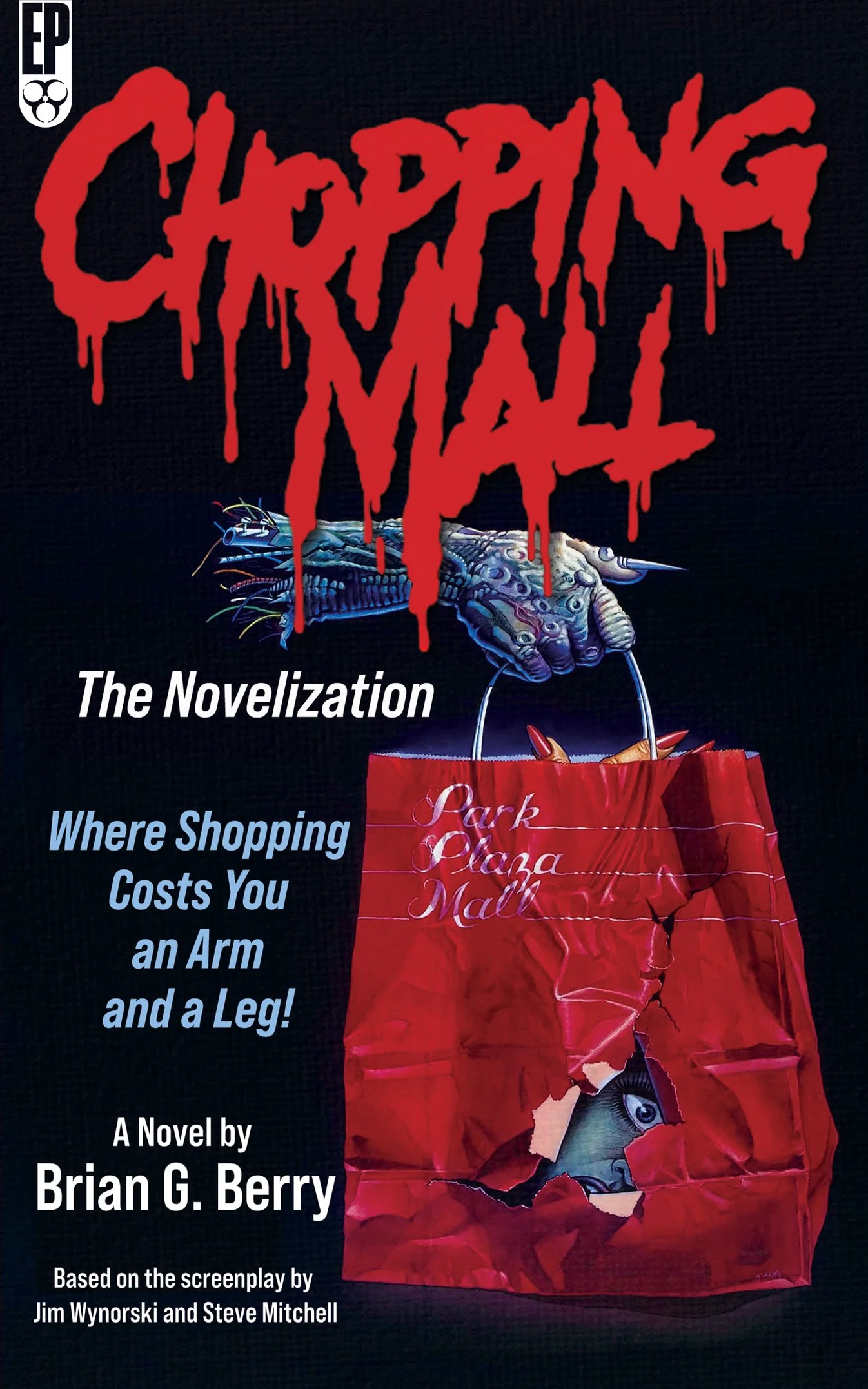
 Chopping Mall: The Novelization 

by Brian G Berry


Author Brian G Berry (from X)

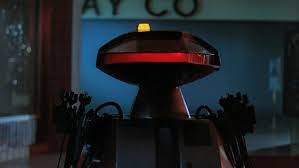
Protector Bot

Corman great and character actor Dick Miller as Walter Paisley

Big thanks to Encyclopocalypse Publications and BookSirens for allowing me to read an early copy of their latest release in their novelization series Chopping Mall: The Novelization. I was also able to preview the novelization of Plan 9 from Outer Space by Brett Nelson, and I really enjoyed the book. Furthermore, this is the third book from Encyclopocalypse Publications I’ve read, and they have all been fun, high quality reads. The movie Chopping Mall is an underrated 80’s techno-horror film, kinding operating as the antithesis of Short Circuit and building on the fears stoked by such films as Terminator. Although released before Robocop, I felt like the movie has some similarities with Chopping Mall as well since it presents a kind of corporate surveillance state where mindless commercialism and consumerism are intertwined with military technological surveillance and control. Maybe I’m looking too much into the subtext of the film since it’s also a fun and silly movie with some crazy kills and over-the-top gore and roboviolence. I feel like many people don’t know too much about this film, and I was glad to find out more as I researched it. I learned that the film has its DNA in Roger Corman’s productions, which is interesting since one of the couples who stays to party at the mall after closing watches Attack of the Crab Monsters and another character reads a book of short stories that features the basis for another Corman production Death Race 2000 (which also features Mary Woronov, who also has a cameo in this film). One of the stores in the film is also named after Corman’s Little Shop of Horrors and there are posters of Corman films throughout some of the stores. One of the great things about the book is that Berry includes many of these references throughout the novelization, but he also seems to add to some of the detaisl. For example, the janitor, played by the great character actor and Corman star Dick Miller, is, I think, the third person to die in the film. Berry names his colleagues Dick and Miller and kills them off too. I don’t remember their deaths in the film. There were a few other deaths in the novelization that I didn’t remember in the film—it’s been a while since I’ve seen it, and so I didn’t remember if Leslie’s dad was killed by one of the Protector bots—he was in the novelization, trying to spy on Leslie and Mike. Berry also adds some backstory to some of the characters that was entertaining. I loved his descriptions and background about Mike Brennan, explaining his interest in gum chewing that the film doesn’t really bother with. The novelization also has Paul and Mary returning to the mall to do something nefarious with their restaurant, not only a reference to the cameos from Paul Bartel and Mary Woronov, but also a reference to their film Eating Raoul. I loved these little nuggets including the reference to the sporting goods store as Peckinpah’s, which apparently was in the movie as well. I also found it interesting that a mall would have a sporting goods store with guns and other weapons, but this was also a major plot point for Dawn of the Dead so maybe that was something that happened more frequently in the 70s and 80s. The novelization stays true to the film, but in addition to the characterization, I also loved the epilogue. It was a cool twist, that I won’t end here, but it makes the protector robots more nefarious and part of a bigger plot. It also kind of opens the door for future movies or books about this robot program. I’m not sure if that will happen, but this was one of the great additions from the novelization. Beyond the epilogue, Berry’s writing also contributes to creating a fun read for fans of splatter and gore. The robot kills are described in graphic and creative ways. It’s over-the-top, but also kind of provides an imagistic description of what happens on the screen. If anything, his descriptions of the laser violence heightens the gore and splatter, adding a new dimension to this techno-horror gem. I found that Berry is a prolific author, so I will have to check out more of his works. I will definitely look for more Encyclopocalypse Publications. I really appreciate the preview copy, and I loved seeing the film stills and posters from the movie. I didn’t realize that the film had a previous title, Killbots, and was changed after it was unpopular at the time. I definitely think that Chopping Mall is a much better title and not only adds to the anti-capitalist message with other films like Dawn of the Dead and Carpenter’s They Live!, which would follow in a few years. The only thing I wish this book had was another introduction or preface by another author who also loves this film. Plan 9 had a great intro from Dana Gould explaining his love of the film and providing some context. I was hoping for a similar introduction to give some additional context to this film and the novelization. Hopefully, other books in the series will continue this tradition. Regardless, the book is still a fun and entertaining read, whether you’ve seen the film or not.

Saturday, June 29, 2024

Dystopian Horror Predictive of our Modern World

                          The Parable of the Sower by Octavia Butler

Nikolas Coukouma, CC BY-SA 2.5 via Wikimedia Commons


 This book was a choice for my book club. The book club randomly selected dystopia as its theme. I tend to shy away from dystopian novels, and although I know that her novel Kindred was very popular at a school where I taught, I never read any of her books. Interestingly, just as I started reading this book, there was a story on NPR about Butler mostly focusing on Parable of the Sower. It ended up being an excerpt from a show called Throughline that had a longer story on Butler’s life and influence on the new wave of Afro Futurist writers. After listening to the story and learning more about Octavia Butler’s life, I ended up enjoying this book much more than I thought I would. This was not a typical dystopian novel, although there are some brutal parts. In our book club, we talked about how in the beginning of the novel, within the first 100 pages or so, it starts to get rather bleak. One of the things, though, that balances this despair is Lauren’s Earth Seed philosophy. There’s also some kind of connection with space exploration that isn’t completely covered in this first book, but overall, I really enjoyed how she outlines and charts the evolution of the Earth Seed movement. It seems to be one of the main things that keeps her going and gradually attracts others along the way. Although some of the secondary characters are not well developed, this was an interesting quest/journey novel. I also appreciated the social commentary that Butler provides with painting such a dire portrait of what would happen if economic, job, race, and environmental concerns are not addressed. As I was reading the book, I couldn’t help but think about the influence of the LA Riots and the craziness of the early 90s. I actually thought the book was written much earlier, but it makes sense that it was published a year or so after the riots. Her description of the Freeway and Los Angeles in general sounded like what happened after the earthquake in the late 80s and the riots. It was also interesting to see some possible connections between Pyro, a synthetic and destructive drug that compels users to set fires, and the crack epidemic that plagued the US in the late 80s and early 90s. Although I was apprehensive to read a dystopian book like this, I really enjoyed it and felt that there were some amazing messages in the events in the novel.