Showing posts with label Mystery. Show all posts

Friday, June 5, 2026

Exploring Unexplained Phenomena in High Strangeness

 High Strangeness by Daniel Noah, Christopher Condon, Zac Thompson, Christopher Cantwell, Cecil Castellucci, and Christian Ward with various artists. 


Many thanks to Oni Press and NetGalley for sharing an advanced copy of High Strangeness Deluxe Edition. I was intrigued by the cover and title, which featured a kind of mysterious element with a little bit of sinister mixed in- and this edition does not disappoint. This unique collection features several stories bound by the mysteries of the unexplained. Furthermore, each story contains both a comic depiction and an essay that provides some background, history, and personal connections with the unexplained phenomenon. I read the comics first, but I really appreciated the essays that follow since they provide a unique insight into how the writers experienced these phenomena, as well as some history about the phenomena. The comics and essays/articles work well together, but it’s also important to note how the comics share connective threads not only through the theme of unexplained phenomena, but it was really cool to see the artists incorporate some shared visual themes and motifs throughout the comics that are eventually explained in the essays.

I really appreciated the unique approach that this collection takes in exploring the unexplained phenomena across different eras. The first one explores UFOs from 1967, and follows an investigative journalist, Jack Kean, who is based on John Keel, the journalist who wrote the Mothman Prophecies and investigated UFOs. In terms of both story and art, this was probably my favorite comic in the collection. It uses a fake UFO sighting and the disappearance of the person who faked the sighting to create questions and skepticism around what is known and what is hidden with UFOs. The story has a great twist and reminds me of X-Files, as Kean becomes haunted by the possibility of UFOs.


Book 2 takes place in 1975 and investigates Sasquatch/Bigfoot. I also really enjoyed this one. The story is interesting, and the artwork is also compelling, especially around sightings of Sasquatch. Furthermore, reading the essay helped me understand the artwork and various evidence that some believers cite as evidence for the existence of Sasquatch. The story takes a surprising turn and calls into question whether Sasquatch is a monster type cryptid or something else that many may not have considered. It tells the story of an inmate named Ellwood who ended up escaping from a prison transfer during a snowstorm with help from a sasquatch. He ends up in a nearby town, squatting in a cabin and building a new life for himself. However, he remains haunted by the encounter with the sasquatch, and as the birth of his first child nears, he heeds the call of the sasquatch (a wood knock, glowing eyes, and a stick structure in the woods. Elwood leaves the confines of his cabin during a storm to investigate these mysterious signs and see if the Sasquatch is lurking for him. This is also the story where some of the visual themes and repeated symbols appear (hello mantis). I really loved the essay as well that provided more background information about wild men and sasquatch myths around the world. In particular, it was exciting to learn about the author’s personal experience in the woods of Pennsylvania. I wasn’t even aware that PA had any kind of sasquatch legends. I really appreciated how both the essay and comic provide background information into these signs of sasquatch and possibly present sasquatch as a beneficial caretaker of the wild.

Book 3 takes place in 1983 and deals with synchronicity. It’s an interesting story about the chance encounters that occur in a father and daughter’s relationship and lives. The artwork for the story is great, and the author of the related essay presents some interesting and meaningful incidents of synchronicity in her own life. The comic story explores how meaningful events can occur on similar dates, and how these events can sometimes influence future events. It’s a touching story, but not as mysterious or phenomenal as the others. Reading the essay gave me a deeper appreciation of the story, but it also demonstrates something the author mentioned about meaning being inherently personal, which is harder to explain to readers. The essay does a good job noting how specific coincidences are connected and add meaning, helping to shape the author’s future decisions about love, work, and life. The comic presents some of this as well, but there are some other events occurring that make the story a little harder to follow than some of the others in this collection.

Book 4 takes place in 2001 and deals with out of body experiences (OBE). The artwork for the comic is well done and engaging, and the essay does well explaining these phenomena, using some personal experiences. The story for the comic is ok. I initially found the main character Adeline a little annoying at first. She seems to rely on coin flips to make decisions, often abandoning responsibilities because a coin told her to. Yet, the ending of the story is interesting, and it seems like she gains significant insight from her OBEs, learning how to access the astral plane and gain some additional information about events in her life. Like Book 3, I felt like the essay was more helpful I explaining the phenomenon of OBEs, but I really enjoyed the artwork in this section.

Book 5 is titled “Infinity” and takes place in the future. It’s a wild ride that provides some essential information about how these phenomena are connected. The artwork for this section is also incredible, and varies from many of the other comics in this collection. It’s a surreal exploration of meaning and myth to better understand how these unexplained phenomena can impact our lives. I also appreciated the last essay from Daniel Noah that explains how he moved from skeptic to believer based on his experiences in the Stanley Hotel. The essay also explores the connective tissue among the various phenomena and how the visual themes and symbols are related in the various stories. It’s a clever and creative way to synthesize these stories and note how much wonder is in the world when we leave open these doors of explanation, even if it’s just a crack.

Overall this was an interesting collection that was fun to read. I love these books that explore mysterious and unexplained phenomena, so this was fun to read. I typically lean more towards the scary, monster type stories like the first two, but I also found the last two stories that explore synchronicity and out of body experiences to be also interesting and somewhat emotional in a heartfelt way. The artwork for this collection is phenomenal, and the essays that conclude this deluxe edition provide further exploration and background information about these mysterious events and phenomena. Although I read the comics first and the essays last, I wondered how reading the essays first might impact my understanding of the comics and these phenomena. I don’t think there’s a right or wrong way to approach this- just two different paths that lead to potentially similar outcomes. Nevertheless, this is a fun and very different read than what I was expecting. Highly recommended, especially if you like learning about unexplained phenomena.


Monday, April 13, 2026

Exploring and Overcoming Past Trauma in Japanese Gothic by Kylie Lee Baker

 Japanese Gothic: A Gothic, Dual-Time Novel of Ghosts, Hauntings, and Redemption by Kylie Lee Baker

Japanese Gothic book cover
Author Kylie Lee Baker

Many thanks to Harlequin Trade Publishing, Hanover Square Press, and NetGalley for the advanced copy of Kylie Lee Baker’s latest book Japanese Gothic. Gothic literature has been around since the 18th century, and is largely characterized by a dark and dreary mood and environment, and often involves hauntings, tragedies, and horror. Furthermore, architecture and buildings, including the surrounding environments like nature, forests, beaches, and gardens can all play an important, if not sinister role in the plots of gothic literature. Kylie Lee Baker’s latest novel emphasizes the dark and dreary elements of gothic, with the occasional blood-soaked violence and gore that was a part of her last book, Bat Eater and Other Names for Cora Zeng. I was really impressed with Bat Eater, finding it surprisingly dark and gory, yet also offering a sense of hope and a way to deal with the anger and frustration of racism and discrimination. I thought that maybe Baker had traded the rambling noise and squalid urban decay of NYC for the quieter, if not more ominous trappings of the ghostly countryside of Japan. Although Japanese Gothic is tonally different from Bat Eater, there are still many similarities, including protagonists haunted and traumatized by their past losses, a connection with spirits, and Baker’s unrelenting pursuit of some of the goriest descriptions of violence (and I say this as a commendation). I was cringing at the blood-soaked ending of the book. Like Bat Eater, this book is also a wild ride, with many unexpected stops along the way; however, there are also more moments of quiet introspection, as the main character, Lee Turner, is kind of an introverted loner, whose dependence on medications keeps him in a perpetual state of haze and fog. Part of this dependency, we learn, is from his mother’s mysterious disappearance on a holiday in Cambodia when Lee was 12.

Lee struggles to make sense of his mother’s disappearance and his father’s muted response to this. Lee retains some strange memories from this trip, recalling a voice from a suitcase, which leads him to conclude that his mother was inside and possibly abducted by human traffickers. The police and Lee’s father come to a different conclusion, assuming that Lee’s mother drowned while out swimming. Neither option offers much solace to Lee, who internalizes the absence and tries to please his father by being an ideal son. Lee eventually ends up at NYU, while his father, a professor of Japanese, ends up living in Japan after dating a series of Japanese women. The story starts when Lee absconds to his father’s house, thinking he has fled the murder of his roommate James, but unsure of what he did with the body. Lee decides that fleeing to Japan to stay with his distant father and his girlfriend Hina will allow him to escape responsibility and try to make sense of his messy life.

Baker alternates chapters with the story of Sen Iwasaki, a daughter of a samurai who lived in the house Lee’s father now occupies, nearly 150 years before. Sen’s father was a prominent samurai for the Shimazu Clan, but by 1877, samurais have basically been eradicated, and Sen’s family struggles to find work and food to survive. We gradually learn about Sen’s struggles to connect with her father, whose battle against the empire led him to return a defeated and somewhat darker individual. Nevertheless, he continues to train Sen since his sons are too young and weak to train. He sees something in Sen, despite belittling her and sowing doubt about her instincts to kill. We also learn about the tragedy of the house, as this once proud family is reduced to eating porridge and hunting small animals while awaiting for reprisals from their enemies. It’s a stark life that both contrasts and mirrors Lee’s life in the present in some ways. Both characters deal with distant or lost parents for whom they grieve, and both Sen and Lee try to accommodate their living parents and connect with them in ways that seem futile. The book is divided into 4 sections, and each section ends with a short excerpt from a fairy tale about a fisherman who helps an injured turtle return to the see. The turtle turns out to be the daughter of the Emperor of the Sea, and as a result of the fisherman’s kindness, the fisherman is rewarded. It’s a little unclear why this story is at the end of each section, but the ending of the book ties these three stories together.

Both Lee and Sen are haunted by those they lost. In addition to her father returning as a shamed warrior, Sen has also lost a sister, and her spirit haunts Sen. Lee is also haunted by the loss of his mother, but his senses are also highly attuned to others. He can hear their heartbeats and know when others are lying due to their posture or movements. These kinds of perceptions make Lee keenly aware of others’ emotions but also seem to provide a kind of fixation that slowly drives him mad (almost like a Poe narrator). One night, Lee hears and feels a heartbeat while lying in bed. He gets up and listens to the room, eventually discovering a doorway in the closet. Likewise, Sen lies awake in her room, communicating with her dead sister, when she eventually is led to the doorway, allowing Lee and Sen to transcend time and meet through this portal.

At first skeptical and defensive against one another, the two must learn to make sense of their newfound connection, and we see how each of them faces challenges in their own worlds, trying to navigate the destruction of each of their own broken families. I was particularly interested in Sen’s challenges as a daughter in a patriarchal society that favors sons, and how she repeatedly receives messages that women cannot be samurais. Nevertheless, she continues to train, fight, and push against these ideas, proving to her father and others that women can be just as fierce warriors. Likewise, Lee must challenge his father’s perceptions about his lack of masculinity, while also challenging his dad’s fetishization of Japanese women. In their work together and trying to understand what brought them together, Lee and Sen form an unlikely bond of shared trauma and doubt. I appreciated how Lee uses technology like the internet to find out about Sen’s history and death, and while Sen thinks Lee might be a demon, he proves his knowledge by predicting a fire that will occur in the town on a specific date. Baker creates an interesting pair whose differences complement one another. However, I really appreciated how the characters and their dialogue all seemed so unique and different. While Lee doesn’t say a whole lot, readers witness his thinking move from the kind of addled-hazy thoughts of someone addicted to allergy medicine to the kind of paranoid and anxious thoughts of someone struggling with withdrawal and trauma. Sen, on the other hand, is much prone to fighting, and readers witness her training springing to action as she is pushed by doubts about Lee’s intentions and the modern world. Baker has created an interesting dynamic that stretches belief, but also keeps readers engaged and makes it work.

There’s a lot to like about this book, especially if you liked Bat Eater. It doesn’t have quite the kinetic energy of that book’s urban setting, yet the rural Japanese setting creates an equally ominous and unsettling mood, especially with the sword ferns in the garden that sway and scratch the house, threatening to poke and stab, as if wielded by some psychotic samurai. Similarly, Baker’s writing is more descriptive and poetic in this book. I kept highlighting these passages that either described Lee’s anxious inner thoughts or reflected them in the environment. For example, from the first chapter “But Lee hadn’t wanted to know the taste of James’s blood, hadn’t wanted to hold this awful feeling inside him, like the collapse of an entire star system inside his rib cage. Lee was full of dead stars and empty universes now.” Or later on in the book “He liked how small the ocean made him feel, like it could devour him and all his problems in a single gulp. Nothing mattered in the face of the endless churning sea. It was important, all-consuming, all-devouring. It might have been beautiful, but Lee had never been good at discerning beauty.” There is darkness in this story, but it’s also brilliantly projected onto the environment and setting, and Baker really captures the characters’ inner turmoil through these descriptions and metaphors.

While I enjoyed the atmospheric and moody nature of the book, and Baker’s ability to distill emotional turmoil either with great analogies or through the surrounding environment, the story is complicated and at times a little hard to follow. There are some loose ends that don’t get completely tied up until the ending, which I won’t reveal. Furthermore, I grew a little frustrated with Lee and his downtrodden nature, but I can see how Baker made him really depressed and traumatized by the loss of his mother, so he also becomes a sympathetic figure. The book also has a lot of incluing and indirect exposition, where we are left to draw conclusions about Lee’s background based on his spotty and naïve memory. And although the premise of this kind of secret portal that allows the characters to meet across time is somewhat unbelievable, I actually enjoyed this element of the story. It reminded me of another Japanese writer who often writes about loss and different dimensions- Haruki Murakami. Although this is like if Murakami was paired up with Stephen King and writing more of a gothic horror novel rather than more of a fantasy sci-fi story about identity. Japanese Gothic’s focus on the gothic elements along with some Japanese mythology and ghost stories creates a compelling atmosphere that engaged me and kept me turning pages, wanting to find out more. I also appreciated the dueling narratives where one chapter focused on Lee and another focused on Sen. It was interesting to see how their stories mirrored and converged. Although it’s not the same as Bat Eater, Japanese Gothic has a lot to offer, especially if you enjoy ghost stories, folk horror, and characters who are prone to hallucinations and fugue states. I’m really excited for Kylie Lee Baker’s next book, as she crafted another complex ghost story about the past that still addresses relevant and current issues in society. Her descriptions, especially the characters’ turbulent emotional states, stand out, but her descriptions of the gore and violence in the book are visceral and left me cringing at the end. Highly recommended!


Thursday, April 9, 2026

Japanese Murder Mystery Guilt by Keigo Higashino

 Guilt: A Mystery by Keigo Higashino; 

translated by Giles Murray

Guilt book cover
Mystery Master Keigo Higashino

Many thanks to St. Martin’s Press, Minotaur Books, and NetGalley for sharing an advanced copy of Keigo Higashino’s latest mystery novel, Guilt. I was excited to read this book because I’ve generally enjoyed Higashino’s books, and this is the first book that features Detective Godai, a police detective in the Tokyo Metropolitan Police Department. Higashino is well known for his other mysteries featuring “Detective” Galileo and Detective Kaga, two distinct characters who have their own logic and methods for solving murders. Detective Godai doesn’t have quite the same presence or investigative skills that Galileo or Kaga have, but this was a solid mystery story that left me wondering about the killer and their motivation.

Godai is called in to investigate the murder of Kensuke Shiraishi, a lawyer that everyone seems to agree was a good guy. While Godai and his partner Nakamachi initially think Shiraishi might have been killed by a disgruntled client, they can’t find any evidence of disgruntled clients. Shiraishi actually checked in on some of his clients to make sure everything was going ok for them prior to his death. Their investigation eventually leads them to Tatsuo Kuraki, an older widower who met with Shiraishi regarding questions about estate law and wills. After some investigation, Kuraki eventually confesses to the murder of Shiraishi as well as the 1984 murder of Shozo Haitani, a financial schemer who entangled Kuraki in paying for medical expenses and transportation after hitting Haitani while he was riding a bike. Although Kuraki was one of the individuals who discovered Haitani’s body, he had an alibi, which led the police to arrest Junji Fukuma, an innocent electronics store owner, whose false arrest eventually led to his suicide while in custody. Kuraki has lived with this guilt for years, and eventually befriended Fukuma’s wife and daughter, although they did not know his identity. He was planning to leave his inheritance to the Asabas (Fukuma’s widow and daughter), but under Japanese law, Kuraki’s son was legally entitled to at least half of the inheritance if he wished to contest the will. This is why Kuraki sought the advice of the lawyer Shiraishi. However, after Shiraishi learned more about the situation and the murder, he apparently encouraged Kuraki to confess to the 1984 murder, even though the statute of limitations had expired. Fearing for his freedom and feeling threatened, Kuraki met with Shiraishi, but killed him because of Shiraishi’s attempts to get him to confess. Although surprised at his confession, the police checked his story and were amazed at Kuraki’s knowledge of the specific details that were not released to the public. Furthermore, they were even more surprised to learn about the older murder. Although the motive seemed somewhat specious, they seemed happy to have a suspect under arrest and in custody.

Although the investigation seems wrapped up, others involved with both the victim and the accused were not satisfied. Shiraishi’s daughter Mirei questions Kuraki’s account, contesting that her father would not have pushed Kuraki to confess. Rather, she recognized that his work as a lawyer would have encouraged Kuraki to maintain his innocence. Likewise, Kuraki’s son, Kazuma, also questions his father’s involvement in both murders, noting that his father was not a killer and seemed incapable of murder, especially as an elderly widower. Will the specter of false accusations and arrests impact this investigation? Will the police and public’s desire for identifying the murderer drive Detectives Godai and Nakamachi to further investigate this strange case where murders were committed nearly 40 years apart? Or will they quickly accept Kuraki’s confession? I was surprised how involved I became with this case, especially after Kuraki confesses so early on in the book. However, it’s Mirei and Kazuma’s insistence that the police misread their fathers’ intentions and actions that kept me reading. In fact, I was also surprised that while this is billed as a Detective Godai mystery, it’s Mirei and Kazuma who do most of the investigation and its their work that leads to challenges to Kuraki’s narrative. The short chapters that focus on different characters give readers varied perspectives from which to observe these crimes and their implications for both victims and the families of the accused. In fact, it seems like that was an underlying message for this story, examining how society, in particular Japanese society, will often castigate the family of an accused murderer, and these families often suffer as much as the victims when they often have no involvement and are also grappling with the implications of the crime. Kazuma ends up having to take a leave from work because of the negative attention his father’s case might have on the firm. He wears a disguise out. Likewise, when Fukuma is accused and eventually dies in police custody, his case is never resolved, and despite no conviction, he is guilty in the court of public opinion, which limits opportunities for his widow and daughter, who not only have to grow up without a husband and father, but also have to grow and live under the shadow of being a murderer’s relative. Higashino seems to be raising questions about this kind of treatment and harsh speculation, looking at how murder implicates all, and often the accused’s families become victims as well.

The book was an interesting read, and since this was originally published in Japan, there are many significant cultural practices that might seem different or out of place in American society. The guilt of family members is one. I also at times found Kazuma, the accused’s son, to be frustrating at times. He is easily duped by a reporter, and possibly because of cultural practice, welcomes the reporter in, feeling bad that he might turn down his interview requests. Similarly, Kazuma feels bad about the negative attention his father’s case brings to his advertising firm, questioning whether he should quit or not. However, readers should keep in mind the context of the novel. Nevertheless, I was really surprised that Kazuma consented to the interview, especially with his concern about publicity for the case and how it would affect his boss and co-workers. Maybe he was trying to create some positive publicity, but it ended up backfiring. There are also some interesting arguments about the statute of limitations for crimes like murder as well as what constitutes guilt and restitution. Kuraki’s lawyer is always looking for angles with which he can show his client demonstrating a level of care or remorse about his crimes. There’s a close scrutiny of the crime scene and the behaviors of the accused, and I enjoyed this level of analysis on these details. Overall, this was an interesting and surprising mystery. If you’ve ever read Higashino’s other mysteries, this is among some of the best, however, the detectives don’t engage with the case in the same way that Detective Galileo or Kaga do. Additionally, the story is complex, involving 2 murders that are nearly 40 years apart, and there are many culturally relevant details that might not be familiar to American readers. However, Guilt is an enjoyable mystery which I gladly recommend. 


Sunday, February 22, 2026

Nowhere Burning A Dark Tale of Family, Friendship, and Survival by Catriona Ward

 Nowhere Burning by Catriona Ward

Nowhere Burning book cover
Author and master storyteller Catriona Ward


Big thanks to Tor Publishing and NetGalley for sharing an advanced copy of Catriona Ward’s dazzling new novel Nowhere Burning. I previously read and was stunned by Sundial, and last year, I read the Shivers Collection, in which her story “Night and Day in Misery” stood out to me as the best story in the collection. I had high expectations for this book, and Ward does not disappoint. Nowhere Burning is a compelling and propulsive novel that deals with families, friendships, and fidelity. In fact, there were elements of the story that reminded me of some of the best parts of Sundial. Needless to say, as one of the best horror and thriller writers I’ve read in the past few years, Ward has created a dark story about death and rebirth that also features a clan of rejected kids who make their own society in the mountains in the abandoned estate of an alleged serial killer who died years earlier in an attack on one of his houseguests that resulted in a massive fire. The killer, Leif Winham, is an actor and star whose loneliness and need for attention lead him to keep his houseguests indefinitely and subject them to gruesome experiments. Leif’s story is one of the three different timelines we see in the story. While we don’t learn a lot about Leif, we encounter him through his hiring of Adam, a handyman whom is hired to build a hidden staircase in Leif’s estate, Nowhere. Through this part of the narrative, we learn about how Nowhere came to be, and we understand the ruins of Nowhere in which the current group, the Children of Nowhere, live. Riley and her half-brother Oliver, were living with Cousin, an abusive family member who doesn’t allow Oliver to attend school and subjects him to harsh physical labor. After a mysterious visit from a floating child named Noon who Riley isn’t even sure if she is real or a hallucination, Riley makes a plan to visit Noon’s group, the Children of Nowhere, in the mountains. Noon provides Riley with vague directions through the park, and Riley makes a plan to escape Cousin’s abuses and join the Children of Nowhere. There’s another story line with Marc and Kimble, true crime documentarians, who are interested in the story of the Nowhere Children, and want to visit the ruins of Nowhere for their next documentary. These story lines converge in an exciting and surprising ending. 

Much like Sundial, I couldn’t put this book down once it started. It’s an exciting story of survival amidst trauma and tragedy, and the kind of terror that groups can inflict on outsiders when they experience external and existential threats to their survival. In a lot of ways, the setting of Nowhere Burning, an abandoned estate that initially had grand intentions as a kind of refuge for Leif Winham, literally a kind of nowhere where Winham wished to escape, but also to inflict pain and torture on those he felt where either taking from him or planning to leave him. Like the home in Sundial, Nowhere operates both in the past and the present, and despite its decay it remains a site of life and activity for the runaways that populate Nowhere. I also liked how both novels examine revisiting the sites of past traumas and tragedies. Although Riley and Oliver don’t experience trauma at the original Nowhere estate, their lives as orphans whose mother tragically passed away and whose lives were neglected and abused at Cousin’s house reflect the same kind of harsh existence that some of the characters in Sundial experienced. In fact, both stories look at the impact of a childhood lost to violence and misguided parenting. It’s interesting that the children of Nowhere seek out abusive and neglectful parents in the town and try to either punish these parents or bring their children to Nowhere to live a more idyllic, yet challenging existence, relying on nature, hunting, and farming to survive. I love how both novels challenge the idea of families, calling into question whether parents and other authority figures really know best for how to raise and care for children. 

Furthermore, both Sundial and Nowhere Burning feature an incredibly eerie setting that takes place in ruins. While the novel is being compared to Lord of the Flies, I also think there’s something Dickensian about Nowhere. It reminded me a little of Miss Havisham’s house, and how the children are both afraid of the house, yet seek to maintain it, not really cleaning the ruins, but keeping the decay and filth, maybe as a reminder, but also as a way of their hope that Leif Winham will eventually return. I loved the eerie and haunting, tragic mood of this story, much like the other texts of Ward’s I’ve read. Also like the other texts from Ward I’ve read, there’s quite a few twists and surprises that these characters encounter. While I was able to pick up on one surprising reveal, I didn’t anticipate the ending. Once I hit the halfway part of this book, I couldn’t put it down, and I found the story to be really propulsive and moving. I especially loved the connection that Riley has with her brother Oliver, and how Riley tries to navigate the challenges of belonging to a new group after leaving Cousin’s abusive home. 

Nowhere Burning is an amazing story that includes a strange and famous serial killer, as well as a kind of strange cult of kids who worship him in his abandoned estate. There are traces of folk horror, cult horror, and true crime in this story, but it is also a story about family and bonds, and how even among tragedy and trauma, those bonds that we forge with our family can be important. Riley is a great main character whose resilience and fortitude enable her to navigate challenging situations. I also loved the different children of Nowhere. A group of kids eking out living amidst the ruins of a once great estate was fascinating. There are elements of folk tales and other stories like Peter Pan in this story, but it is a much darker take. The only thing I wished there was more of was the connection the children have to Leif Winham. I don’t remember a clear explanation about how or why they came to appreciate him. There’s also some ambiguity about how the children of Nowhere eventually came to be. We know that there was a power struggle, and Noon and her group eventually won out, but I wondered if there was more to that story than Ward included here. Nevertheless, this was a great book that I couldn’t put down once I really got into the story. Highly recommended!

A Thrilling Folk Horror Spy Serial Killer Combining Genres: No Man's Land by Szymon Kudranski

 No Man's Land by Szymon Kudranski

No Man's Land book cover
Author and artist Szymon Kudranski


Huge thanks to Image Comics and NetGalley for sending me an advanced copy of Szymon Kudranski’s paranoid, dark, evocative horror thriller No Man’s Land. I wasn’t sure what to expect from this comic, but the fact that this story featured a mysterious, ritualistic death in 1963 on a remote land bridge near Alaska that required investigators from the KGB and the FBI to investigate seemed really intriguing. I imagined that with 1963, the story had something to do with US-Soviet tensions and possibly the Kennedy assassination. However, I wasn’t anticipating the kind of occult and folk horror elements that haunt the pages of these issues. The story is especially compelling once FBI Agent Collins is dispatched to the remote area of Diomedes in Alaska to investigate this mysterious ritual-like murder of a young woman. Her body appeared on a land bridge that only emerges for 3 months out of the year. This bridge is literally a “no man’s land” since it spans Alaska and the USSR, but it was also the land bridge that enabled older generations of early humans to cross from Asia to the Americas. Since the local law enforcement cannot investigate, Collins is partnering with a KGB agent in a joint effort to maintain diplomatic relations during a heated cold war. 

I loved the story and plot twists in this graphic novel. The story is rooted in history, so it incorporates elements of political thrillers and spy stories; however, it also captures elements of serial killer and folk horror films. In fact, some of the alternate covers include homages to Silence of the Lambs and John Carpenter’s The Thing. I also couldn’t help but think of the most recent edition of True Detective that is set in remote Alaska. Collins’ investigation takes him to some of the indigenous people of this remote arctic region who maintain their traditional beliefs and practices and are not really a part of the Soviets or the US. One of the eeriest parts of the book is a young girl who may have encountered the killer. The girl is somewhat catatonic, and she only scribbles on paper with a twig. Her skin has erupted in odd rashes, and she claims to have seen an ocean of blood. All of these clues along with the ritualistic killing of the woman who was disemboweled and positioned with her hands pointing like Baphomet, add a kind of apocalyptic tone to the story. This also makes sense when we consider that this killing happened amid the nuclear threats from both countries, a kind of threat that promised mutually assured destruction. I won’t get into more details about this story, but I felt like it had so many of the great elements of genre stories that I enjoy. There’s mystery, horror, espionage, and folk horror, and apocalyptic dread. 

What also makes this comic stand out is the incredible artwork from Kudranski, who is also the author as well. I loved the artwork and how it has almost a kinetic feel to it as the images zoom out to give readers a sense of the vast openness of the arctic wild, making the characters seem insignificant and weak, but then zooming in to closeups to give readers a better sense of their stress, worry, dread and fear. In addition, Kudranski includes some newspaper clippings, maps, and government documents in the background to give the story both a realistic and a kind of collage like feel. This was another strength of the story for me. I loved how this created a realistic and historical feel to the story. While most of the story is in black and white, Collins visits the blood ocean, and it is done in a glorious deep red, along with other deaths and kills. The artwork complements, if not leads, the story, to make this a great historical horror thriller. Highly recommended!


Tuesday, September 16, 2025

Corporations and Clans: Fiend by Alma Katsu

 Fiend by Alma Katsu

Fiend book cover
Author Alma Katsu


Many thanks to G.P. Putnam’s Sons, Penguin Random House, and NetGalley for allowing me to preview Alma Katsu’s excellent new book Fiend. I was really excited to see this book available since I have a few of Katsu’s books on my to be read shelf. This opportunity to preview the book would propel her book further up on my list and allow me to read one of modern horrors most popular writers. Although Fiend differs in setting from some of Katsu’s other books that often take a historical perspective on horror, this book set in the modern corporate world has plenty of intrigue, suspense, and a few brutal kills. What I enjoyed most about this book was the narrative propulsion, and how quickly the book moved. The chapters were brief, but full of character development or key action, and helped to move the story forward by creating these complex characters who were motivated not only by family and tradition, but also by power and their own desires. Katsu created some complex characters who I both felt sympathy for and questioned their motivations and behaviors. This kind of character development kept me reading to see what would happen next. Although Fiend is a horror book, it also reminded me a lot of the show Succession, where siblings vie for the affections and attention of the family’s patriarch, whose focus on family seems to blur with the family’s namesake company, Berisha International. Katsu has developed some amazing characters who are unique, and represent different ideals for the company: Dardan, the reluctant first born son, Maris, the bold middle daughter, and Nora, the neglected youngest, all have different ideas about the direction the company should pursue as their father, Zef, a hardnosed Albanian immigrant, continues to blend strategy with morally questionable methods. I loved how different chapters focused on different siblings, exploring their relationships both in contemporary times and occasionally alternating with experiences from the past. This kind of narrative structure with chapters labeled “Now” and “Then” was a great device that Katsu uses to give some backstory to the siblings’ complicated relationship with their father and better understand why Zef decided it was best to move out of the house, but still have dinner with the family on Sundays. Beyond Succession, the book’s narrative structure focusing on multiple complex characters and occasionally shifting between present and past reminded me of some Stephen King novels, where we see how past events and traumas can affect characters’ behaviors and how they treat one another in the present.

One of the other elements of this book that I loved is how Katsu blended a kind of folk horror/folklore and mythology with a modern corporate story. I don’t want to give anything away, but as Albanian immigrants, Zef and his wife Olga have decided to maintain some of the traditions and practices from the old country. This leads to some tension with their first generation children who were born in America, and struggle to understand some of the unreasonable expectations around marriage choices and lineage regarding the operation of the family’s company. Fiend features many plot twists and turns, revealing some unexpected events, yet Katsu provides a slow burn as the children’s memories of strange events from their childhood eventually lend credence to the forces that have made Zef such a feared and powerful CEO. This was a fun and exciting book to read, one that I highly recommend. It’s a propulsive read that kept me engaged, wanting to keep reading to find out what would happen next. It’s also a timely read that calls into question the nature of corporate behavior and ethics, making me wonder at which point do we question profits over people. While Katsu doesn’t propose any solutions or preach any answers, she does present an entertaining parable about the desire for power and the irony of enjoying leadership and responsibility. Highly recommended!


Saturday, June 21, 2025

Detective Kaga returns

 Final Curtain by Keigo Higashino 

(translated by Giles Murray)

Final Curtain book cover

The Final Curtain is another mystery for Detective Kaga to solve. It’s framed interestingly with the story of Kaga’s mother, who deserted her family. As I read the beginning, I wasn’t sure what the mystery was, but there is a connection to the larger mystery and Kaga’s mother. Nevertheless, I also wondered whether the experience of these mothers who abandoned their families was shedding some light on issues in Japanese society and how women sometimes give up their jobs to stay at home. I’m not sure if that was the case, but I think that Higashino’s other books often call attention to issues in Japanese society like pollution (A Silent Parade) and domestic violence (Devotion of Suspect X). I’ve read most of Higashino’s books that have been translated, and I generally enjoy these mysteries. However, with this book and Death in Tokyo, I felt that the mysteries were becoming a little more far fetched and unbelievable. I won’t give anything away about the twists and nature of the mystery, but I questioned the actions of some of the characters and found them to be somewhat implausible or just wondered why they didn’t take different actions. It could be something that is lost in the translation or cultural differences, but it seemed that major elements of the plot depended on some character motivations that seemed somewhat questionable to me. Nevertheless, this was a quick and easy read. I hope that Detective Kaga returns to some more enjoyable and propulsive mysteries.    


Thursday, May 8, 2025

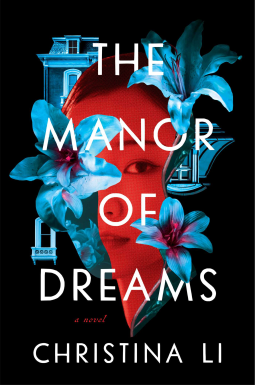
A Unique Twist on Haunted Houses: The Manor of Dreams by Christina Li

 The Manor of Dreams by Christina Li


Author Christina Li

Thanks to Avid Reader Press/Simon & Schuster and NetGalley for providing me with an advanced copy of Christina Li’s exciting and intriguing new novel The Manor of Dreams. I enjoyed this book for its genre bending story and plot twists, as well as tracking how the characters have changed and what events affected them throughout their lifetimes in the alternating timelines between past and present. Furthermore, Li has some lucid and haunting descriptions of the atmosphere, landscape, and decay for the setting of this novel in a renovated family mansion that has fallen into disrepair once again. While this supernatural mystery might not be for everyone, I thought that Li’s writing, plot twists, and characters created a compelling and engaging world that kept me reading during the second half of the book. I also loved the play on words with the title, how it might refer to a dream house, but it is also about the nature of our dreams and what they mean. Vivian Yin, one of the main characters, experiences strange, haunting visions once she moves into Yin Manor, the house of her husband’s family that he has renovated for both of them. Other characters also experience similar strange visions, tremors in the middle of the night, and plants that seem to want to consume people.

The Manor of Dreams starts with the recent death of one of its main characters, Vivian Yin, the first Chinese actress to win an Academy Award. Her surviving daughters, Rennie and Lucy and Madeline, Lucy’s daughter, arrive at the house to review the will and sort through their Ma’s items. However, they were unaware that the daughter of her mother’s housekeeper and gardener, Elaine Deng, would be in attendance with her daughter Nora. “Part One: Root” establishes an incredible amount of tension between these two groups of women, the Yins and the Dengs. Lucy and Rennie have not seen Elaine for some time, and based on the tension and Elaine’s rule that Nora should not speak to the Yins, Li has established that there is some bad feelings and resentment between these two families. To add to the tension, Lucy and Rennie are surprised to learn that their mother only had about $20,000 to leave them as an inheritance, and Vivian left the house to Elaine. This surprise gift, along with learning that Vivian changed her will about one week prior to her death adds to Lucy’s suspicion that Elaine had something to do with Vivian’s death. Lucy begins to investigate, while Elaine digs in and claims the house as her rightful inheritance, although she does allow Lucy, Madeline, and Rennie to stay in the house and sort through Vivian’s things for the week. Lucy really wants to search around for evidence of Elaine’s involvement in the will change and Vivian’s death. This section also establishes some of the traits of these characters as we learn that both Lucy and Rennie lived privileged lives, attending boarding schools. Lucy became a lawyer, while Rennie pursued acting and modeling. Neither was particularly close with Vivian in her last years, as Vivian seemed to become a recluse, rarely going out and even firing home help aides that Lucy hired. We also learn that Elaine was in a PhD program, but eventually left since it was not a career for her and Nora was about to be born. Both daughters, Madeline and Nora, are right around the same age, yet have had different experiences that bring them to this strange encounter over a contested house. Furthermore, both daughters receive warnings to keep out of the garden, yet both are somehow drawn there, with Madeline eventually ending up there. This garden appears strange, and offers some of Li’s most atmospheric and interesting descriptions: “She leaned in, expecting the buds to have a faint, sweet scent. But instead the petals emitted that raw, sharp odor of rust.” Flowers, especially these kinds of strange, decaying and rotting varieties, feature prominently throughout the book, and not only contribute to the atmospheric mood of the book, but also represent the kind of decay and rot that is apparent throughout the house as well. Li’s writing and descriptions of the various decay around the house contribute to the feeling that death and decay are all around, and this kind of rotten decay is gradually overtaking the living, having some kind of impact on their behavior, their well-being, and their interactions with one another. I loved the way that Li includes this kind of symbolism throughout the book, and how the decay permeates throughout the plot. This section ends with Madeline somehow being engulfed by the plant and Nora coming to her rescue, tending to the wounds that the plant inflicted. I read The Ruins by Scott Smith last summer, and Li’s The Manor of Dreams might come in second to having some of the creepiest plants in a book.

“Part Two: Bloom” begins to examine the past to learn more about how Vivian Yin met her husband, the actor Richard Lowell, and how Vivian eventually broke into acting and attained acclaim and an Academy Award. These chapters alternate between the 70s, 80s, 90s, and the present. I also enjoyed the structure of the book, how readers are confronted with this mystery of why Vivian didn’t leave the house to her daughters, but rather to the daughter of her gardener and housekeeper with whom she seemingly had no contact for decades. These chapters gradually reveal what happened, helping readers understand not only Vivian’s background, but also those of Elaine and her younger sister Sophie. We not only learn more about Vivian’s experiences and struggles as a single mother and aspiring actress in 1970s California, but we also see the challenges she faces as a person of color and how limited roles were for her in films. Richard, on the other hand, seems to be a coveted actor who winds acclaim and seems to easily take on roles in popular and acclaimed movies. Nevertheless, the couple has a kind of competitive spirit between them that pushes them to excel in acting and to seek out other opportunities in filmmaking. Furthermore, Richard is interested in renovating his mother’s childhood home, which the family sold years ago. His fixation on the past and desire to recreate the past glory of his family in his own image bring about challenges, as he and Vivian experience a long period of fixing up the house, that almost never seems to end. Furthermore, when they move in, there are strange occurrences like tremors that only Richard feels, burst pipes, and hallucinations that Vivian witnesses. Vivian learns more about Richard’s family, although she learns through local library research since Richard doesn’t seem to want to discuss his family’s background. I found this a little odd, not only with Richard, but with so many of the characters in the book. While Richard especially seemed interested in rehabbing his family manor and reshaping it into his own vision, he didn’t really want to talk about his family history. Lucy, Rennie, and Elaine also don’t like to discuss their pasts with their daughters, and it seemed strange that they were all willing to meet up in this decrepit house and fight over its ownership, despite not really acknowledging the painful pasts that they share. However, I think that this is part of the message in the book- that there are consequences for failing to acknowledge one’s past, and that sometimes, failing to acknowledge the past can create a kind of haunting experience.

I won’t provide any additional plot details because there are many twists and unexpected turns throughout the book. Furthermore, Li’s parallel narratives that move between the present and the past help to unravel the mystery of why Vivian was leaving the home to Elaine and not her daughters. Initially, we are only left with Vivian’s final words to her lawyer, Reid Lyman, that leaving the home to her daughters would “ruin them.” As we move through Vivian’s past, her relationship and marriage to Richard, and the challenges she faced in Hollywood as an actor of color trying to find parts, we learn more about the steps she’s taken to protect her daughters and ensure they have the best in their lives. We also see that Richard’s family, including his mother, whose microaggressions towards her new daughter-in-law, distance themselves from the house, leaving readers to wonder whether the house itself is cursed, or whether there are other factors that may affect inhabitants of the house. I appreciated the ambiguity and mystery in this story, and Li’s gradual reveal of the backstory presents some intriguing events and twists. However, Li’s descriptions of the house, gardens, and flowers were especially evocative and effective in conveying the sense of decay and decadence within the home. This was the section that I couldn’t put down, and the short chapters that offered alternating perspectives of the different characters and their histories kept me engaged in the story. There is a final part of the book, “Rot”, that jumps back to the present and provides a climatic end to the story. Again, I don’t want to spoil this book since I hope that others will read it. Nevertheless, I really enjoyed this book. It wasn’t exactly what I expected. Although it is mysterious, I appreciated Li’s use of a kind of gothic horror throughout. Li presents a unique portrayal of the haunted house story, and leaves readers wondering about the nature of deceit, evil, and violence in relationships. Furthermore, it was interesting to note that these aren’t just romantic relationships, but we also see family relationships, and how withholding information and past events can impact our relationships with parents and siblings. Li’s symbolic use of decay throughout, whether in the house, plants, or even the hallucinations that some characters experience, also help to create the mysterious and eerie atmosphere of the book. I also appreciated how Li included Chinese language- characters and words- throughout the book to emphasize Vivian’s heritage and how she worked to maintain her culture in an industry and city that tended to stereotype her. It’s not something that I mentioned throughout this review, but it is another important part of the book. This is an exciting and engaging read. Highly recommended!


Sunday, April 27, 2025

A Unique Twist on the Urban Legend of Polybius

 Polybius by Collin Armstrong

Polybius book cover
Author Collin Armstrong

Big thanks to Gallery Books and NetGalley for providing me with an advanced copy of Collin Armstrong’s thrilling and inventive book Polybius. For those who may not be aware, Polybius is based on the urban legend of the mysterious video game that suddenly appeared in Portland, Oregan in the early 1980s, and is supposedly part of a government mind-control experiment. While I’m not sure of the origins of this myth, I’ve heard that the arcade game Polybius may have been like a CIA recruiting tool to see which players excelled at certain killing skills, while other versions have claimed that Polybius was a mind-control tool that induced various neurological problems like headaches, seizures, and blackouts. Interestingly, according to Wikipedia, it seems that the Polybius urban legend may have even influenced the great 1984 film The Last Starfighter. In Collin Armstrong’s imagination, Polybius takes on a more destructive and deadly turn that transforms the sleepy seaside town of Tasker Bay into a raging storm of violence and chaos shortly after the mysterious arrival of the Polybius cabinet in the town’s local arcade and video store Home Video World. Polybius has a lot of throwback references throughout, chief among them the local arcade where kids hang out and shady business happens in the back, mostly from the shady owner, Mal. Like many new games that arrive in an arcade, Polybius attracts crowds of players, who begin exhibiting strange and aggressive behaviors as they jockey for space in front of the cabinet, staring at the flashing strobes and runic like shapes that appear on Polybius’s unique and large screen.

I absolutely loved this book and couldn’t put it down. It was such a fun and exciting read, although it does have plenty of dark parts. Nevertheless, there are plenty of reference points throughout the book, and even if you aren’t familiar with the urban legend of Polybius, the book has plenty of thrills and mystery to engage readers looking for both something familiar and something unique and inventive. I loved what Armstrong does with the legend, taking the basic framework of the story about a video game that has powerful psychological and neurological effects on players, and transforming it into a story about its impact on an entire town. Even more interesting is how he develops the idea that Polybius is part of a government program. I won’t share much more than that, but it is interesting to see how this kind of program has relevance in today’s world despite the book taking place in the early ‘80s.

In addition to the unique twist on the Polybius urban legend, Armstrong creates an interesting world of Tasker Bay, which is a seaside town in Northern California. The chapters are divided into subsections, and each subsection tells the story from a different characters’ perspective. The main characters are Andi and her mom Rachel, who both relocated from Silicon Valley/San Francisco area to Tasker Bay after Rachel left her husband, who is a kind of freelance engineer. Andi, reluctant to move, is standoffish and doesn’t want to develop friendships, but works at the arcade, Home Video World. Rachel, Andi’s mom, is the town’s doctor. There’s also Ro (short for Roman), who is a classmate of Andi’s, and his dad David, who is the town’s sheriff. Mal, the owner of Home Video World, is Andi’s boss, and someone who experiences early exposure to Polybius’s power. As a result, he comes under suspicion for a mysterious and violent incident early in the book. There are some other less prominent characters, but Armstrong’s writing and chapter development create a realistic and full sense of the Tasker Bay community. It’s not just the background of these characters, but we also learn about the simmering tensions, jealousies and resentments that underlie the characters’ actions and motivations. I loved how these chapters are developed and created. In some ways, it reminded me of some Stephen King books that take place in small towns in Maine. How we learn brief elements of the characters’ backgrounds and qualities adds to the depth of the story and the interactions and conflicts that arise. In other ways, the story and town reminded me of some films. On the one hand, I couldn’t help but think of The Fog, John Carpenter’s moody piece about a coastal California town that experiences terror when a fog rolls in on the 100th anniversary of a major event. In Polybius, most of the chaos starts to unravel about a week or so after the arrival of the game, and this coincides with a major storm that makes leaving the town difficult. In other ways, the story reminded me of Romero’s The Crazies, where a town’s drinking water is infected with a chemical agent that makes the townspeople become violent. The government tries to take over the town, but struggles against the violence the townspeople are capable of. Polybius also transforms the townspeople into violent people capable of great destruction, but it’s not just those who play the game who are “infected”. We see how there are adjacent individuals who also get swept up in the violence and paranoia as the town gradually descends into chaos. I also kept thinking of Arthur Miller’s The Crucible while I read Polybius, as we see how the loss of control and authority in the town allows long simmering feuds and resentments to boil over and cause vengeance and vigilantism. The book raises many important questions about the nature of authority and control in society, especially how governments and social institutions should address these kinds of threats to society. The book was cinematic and compelling. I could see this as a movie or even better as a limited series where we have time to develop some of the characters and their conflicts even further and get more of the backstory about how the game’s development came about.

I am so glad that I finally read this book. As soon as I saw the title, I was interested since I’ve heard about this urban legend, but didn’t know too much about it. Although Armstrong takes some liberties with the legend, I loved what he did. It was inventive and creative, and I did not expect the twists and turns that he took with the Polybius urban legend. I also loved the references to the 80s. I some reviews that mentioned Stranger Things, and I could see that with the multi-character story that takes place in a small town and deals with mysterious government mind control programs.  I also wondered if two characters, Whitney Hines and Greg Streiber, was a Wolfen reference (author Whitley Streiber and star Gregory Hines). There was even a reference to Bucks County, PA, which is right around where I live. It seemed like such a random reference in the book, but I wondered if the author had some connection with Bucks County. I hope that Collin Armstrong has more books on the way. This was such a fun and exciting read that deals with such an interesting topic. He took a mysterious urban legend and transformed it into an inventive and creative story which a cast of unique characters who populate a realistic world that gradually descends into chaos. Highly recommended book!


Saturday, December 14, 2024

Mysterious Images that Drive Haunting Mysteries

 Strange Pictures by Uketsu


Mysterious author Uketsu

Little A's Picture from Dr. Hagio's Collection

The Smudged Room (Chapter 2's story)

Picture from The Old Woman's Prayer (Chapter 1)

The Old Woman's Prayer (Chapter 1)


Thank you to Harpervia Publishers and NetGalley for allowing me to read an advanced copy of Strange Pictures by Uketsu. Artists, visual artists in particular, require not only vision and skill, also a kind of compositional and stylistic know-how—the ability to not just represent what they see, but also to tie the lines, colors, and shapes together into some kind of meaningful whole—to build on parts for a synthesis, often creating something new or unique. Uketsu, the pseudonym of a writer and visual artist in Japan, has uniquely done this through both images and stories based on the images. Strange Pictures is Uketsu’s first published work translated into English. According to the author bio at the end of this book, Uketsu only appears online and masked, where he has published other sketch mysteries. I haven’t checked these out, but after reading Strange Pictures I am more intrigued about what these sketch mysteries might be like and whether they are other stories that are different narratives, but stylistically related to the four stories in this book.


I definitely enjoyed this book. There are four stories that all feature drawings. The story is framed by a child psychologist sharing an picture created by a client. Dr. Hagio walks us (and the class) through an analysis of the image, examining finer details of the drawing and suggesting aspects of the artists/client’s character and psychology. In many ways, readers (and characters) will also apply these analytical skills to the other stories and the drawings they feature. I wasn’t quite sure what to expect, but the stories are all somewhat different. We do learn about the common underlying thread that links them all by the end of the story—and I think this is mentioned in other reviews. I won’t give it away, but from my reading, I enjoyed knowing this and trying to figure out how the stories were connected.


I liked the first two stories the most. Both had some kind of supernatural and ghostly quality to them. I especially liked how strange and mysterious the first story was. Yet it was also somewhat relatable and kind of like a creepy pasta story. Two college students, members of their paranormal club, gather together to discuss a mysterious blog that starts of seemingly normal, but eventually devolves into a sad story of the death of a wife in childbirth. The posts between the beginning and the end document the couple’s pregnancy and feature “Strange Pictures” that are somehow linked. The final post also presents another twist to the mystery, and sets the two members off on a quest to see how the images are related. I’m not quite sure how they figured it out, but it is a really inventive story and use of images to further the plot. Plus, I found the whole aspect of examining an older blog and speculating about the author’s life to be fascinating (and something I’ve done as well). It was cool to see how the author used this medium and some of the personal clues to kind of create and try to solve a mystery of this person’s life. The other stories don’t use drawings in the same way, although the third story “The Art Teacher’s Final Drawing”, does make more use of the image than stories from Chapter 2 or 4. Chapter 3’s story about an art teacher’s murder is the longest, and is more like a mystery. There were definitely parts that were compelling, but also some parts that were somewhat unbelievable. The mystery really centers on some highly technical information that isn’t probably common knowledge, and I’m not sure how someone would find out. However, I kind of found the murdered art teacher, Miura, a little humorous. He was described as not a very likeable person, someone who was quick to anger, and people close to him didn’t seem that upset by his death. This was mentioned repeatedly and seemed much different from other characters who are murdered in mysteries. Regardless, it is a compelling mystery and kept me guessing and reading. Similarly, Chapter 2’s story “The Smudged Room” relies on knowledge of kanji to interpret what happens in the drawing. It is an interesting story, and there are some kind of mysterious and creepy elements to it as well. The final chapter also ties things together, and it was a quick read.


Overall, I enjoyed this book, and I loved the use of images and pictures to further the stories. I can’t wait to check out Uketsu’s other online work to read more of these kinds of sketch mysteries. This book was a quick and enjoyable read. Very unique and interesting, and I hope that there are more Uketsu books to come.