Showing posts with label 33 1/3. Show all posts

Tuesday, November 3, 2026

Whitney Houston's I'm Your Baby Tonight (33 1/3) by Brandon Tensley

 Whitney Houston's I'm Your Baby Tonight  

(33 1/3) by Brandon Tensley

Author Brandon Tensley


I was a little hesitant to read this book since I’m not a huge Whitney Houston fan, and I really was not that familiar with her 1990 album I’m Your Baby Tonight. Weirdly enough, I felt like I grew up with Whitney’s earlier music in some ways, as one of the few cassettes my mom had in her car was Houston’s 1985 debut album Whitney Houston, featuring “The Greatest Love of All,” one of the few secular songs we sang in Catholic school. Although my mom didn’t have Whitney, I distinctly remember seeing the videos for songs like “I Wanna Dance with Somebody” and hearing “So Emotional” on the radio when my emerging musical tastes were diverging from my parents’ influence. I can’t also forget her rousing rendition of the National Anthem for Super Bowl XXV as the nation tuned in to watch the Bills lose on a last second missed field goal as it was grappling with its involvement in Desert Storm. I’ve never been overtly patriotic, but Whitney Houston definitely brought people together, conservatives and liberals, white and Black, young and old, and used her voice to evoke positive feelings about our country, and as author Brandon Tensley notes, she also was able to radically reclaim this ode to freedom, making “ ‘free’ the emotional centerpiece of the song.” Reading Tensley’s entry into the 33 1/3 collection made me appreciate Houston’s overlooked and sometimes maligned career and life, as he not only serves as a champion for Whitney’s career and often overlooked album, but he also ends up championing the harsh realities that female artists, especially Black female artists, face in maintaining pop supremacy while also being artistically authentic. I didn’t expect to be so challenged and have to interrogate so many assumptions about pop music, but Tensley’s research and analysis provides a clear entryway to further analyze one of the most successful and misunderstood female artists of the 1980s and 90s.

Rather than taking a traditional approach to examining Houston’s 1990 album I’m Your Baby Tonight by discussing its creation and production, Tensley frames this album in the greater context of Houston’s other albums and pop domination. However, as Tensley explores Houston’s success with mainstream (and white) America, he notes that she faced backlash and frequent accusations of selling out or not being Black enough as an artist. Tensley sees I’m Your Baby Tonight as both a statement to Houston’s Black critics, bringing in more of a new jack swing style, which was popular in the late 80s and early 90s, from producers LA Reid and Babyface, and also asserting more of her sexuality with songs that thematically discussed sex and one night stands more than the love songs on her previous two albums explored. It’s interesting to consider, especially when I think about many of the female R n B artists that followed Houston’s lead from TLC and SWV to later acts like Monica and Brandy in the later 90s. Houston, along with Janet Jackson, challenged the ideas of Black female sexuality and love in popular music, and while Houston didn’t necessarily have the dance moves of Janet Jackson, Tensley argues that Houston’s background in Gospel music and her relationship with Robyn Crawford enabled Houston to craft a more complex and nuanced idea of love and sexuality in R n B and pop music than was previously presented. Tensley analyzes each of the songs, and while he does present information about the song’s production and recording, he also takes the time to analyze the sound, its evolution from Houston’s other work, and the lyrical content, exploring how the song’s offered more nuanced meanings and interpretations than her previous love songs that often followed a forlorn more abstract approach to love as a feeling. It’s interesting to consider, especially as Tensley reminds readers that many of these songs came out at the height of the AIDS crisis, which Houston was impacted by.

Beyond the musical content of Houston’s third album, Tensley also explores her later work, as well as Houston’s championing and support for other female artists, including Brandy and Miss Lauryn Hill, another New Jersey artist whose own struggles with the music industry and its expectations for control of her artistry and image, have led to labels and perceptions about her personality, similar to Whitney Houston’s. Tensley also takes some of the last chapter to reference Britney Spears, who serves as another cautionary tale for how the control of these female artists’ image and the public’s desire for spectacle and their suffering can have tragic consequences, as it did with Houston’s own death at age 48. Again, I was not expecting to think this much about how the music and entertainment industries will put these female artists through the wringer to extract what will be most entertaining and profitable, but Tensley provided many different examples and reminded readers of the ways in which Whitney Houston sought to reclaim her own identity rather than be controlled by record labels. For Tensley, this started with the album I’m Your Baby Tonight and proceeded to future decisions from marrying Bobby Brown to her later work on recording breaking Waiting to Exhale and The Bodyguard soundtracks and starring in The Bodyguard and The Preacher’s Wife. This is a fascinating look at one of the most important and beautiful voices in music from the 80s and 90s. A few years ago, I heard an acapella version of “I Wanna Dance with Somebody,” and I was amazed at how beautiful and joyous Houston’s voice was. It gave me chills, but it also brought about a sense of sadness since I realized she was no longer going to sing new songs. Although I’m not as much of a Whitney fan as Tensley, like a lot of 80s and 90s kids, I can say that her music was definitely a part of my early musical awareness. Even in high school, songs like “I Will Always Love You” were always on at dances. Even now, if I hear her voice, I get so emotional (pun intended). She possessed an extraordinary voice, and while artists like Brandy, Miss Lauryn Hill, and even Beyonce have forged their own place in popular music, they might not have made it this far without Houston’s trailblazing work.

I love the 33 1/3 books because they highlight the importance of an album, even if that album might not always be the most well-known or best achievement by an artist. While some writers highlight the creation of the album, others provide historical, background, or contextual information about the album’s significance. Some of my favorite 33 1/3 entries provide personal connections, with authors exploring how the album connected with or serves as an important marker in their own lives. I was so glad that author Brandon Tensley adds in his own personal experiences and connections with this album, not only making the argument for why it’s Whitney Houston’s best and most personal album but also making the case for why I’m Your Baby Tonight is his favorite album. His own personal connections, memories, and discussions with friends highlight how important Whitney Houston’s artistry is and why she remains a complicated but important artist who needs to be celebrated. Many thanks to Bloomsbury Academic and NetGalley for sharing an advanced copy of this wonderful addition to the 33 1/3 series. Highly recommended! 


Wednesday, September 30, 2026

The Personal and Cultural Impact of Frank Ocean's Blonde (33 1/3 Series)

 Frank Ocean's Blonde (33 1/3 Series) 

by Yousef Srour


Author Yousef Srour

In the Epilogue to Yousef Srour’s debut book, a 33 1/3 entry focused on Frank Ocean’s Blonde, Srour recounts that after finishing the first draft of the book, his editor “suggested that I needed to put more of myself into these pages”. While detailing and analyzing personal connections to albums can sometimes have mixed results in the 33 1/3 book series that focuses on a significant album, I find these personal connections to be highly insightful and wonderful to read. Although many of the books include details about the creation of the album, how the album is situated in the artists’ career and catalogue, or the album’s cultural significance, sometimes learning about an individual’s personal connection to the album is also meaningful and prompts some self-reflection and introspection from the reader. This is the case with Srour’s meditation on Frank Ocean’s Blonde, an album that Srour likens to other cultural and generational touchstones like Hendrix’s Electric Ladyland, Prince’s Sign O’ The Times, and Radiohead’s Kid A (although I might argue that OK Computer might be another comp).  While I’m not as familiar with Ocean’s work as some of these other referents, Srour provides plenty of musical and artistic influences to demonstrate where Ocean’s music was influenced, but more importantly Srour documents both the cultural and personal impact of Ocean’s work, and how not only Ocean’s approach to music and visual albums, but also his groundbreaking statements about his sexuality shifted ideas about masculinity, vulnerability, and sexuality in music, especially in hip-hop and R&B. One of the aspects about Ocean’s work that I found so interesting was his work with Odd Future, the hip-hop collective that birthed Tyler the Creator and Earl Sweatshirt but was also infamous for their controversial and shocking lyrics and themes. Yet, as Srour documents interviews with Tyler and Ocean in his book, they found inspiration and support from one another, even if their music moved in different directions and focused on different lyrical content. If anything, as Odd Future has grown apart and its members matured, it looks like the immersive and conceptual approach to music and art was apparent in Ocean’s work as well as Odd Future’s shock doctrine. Srour helps readers draw these connections through his extensive research “about the most enigmatic record of my generation”, documenting not only his findings but also the effects of writing, meeting deadlines, and trying to support oneself through the creative process. The book becomes not only an critical reflection on the album, but also a meta-narrative about the creative process where readers are able to witness the struggles and challenges that artists and creators experience, whether it is doubt, stress, habits, and even tinges of madness and paranoia that seem to glean a teeming brain. Are these influences or implications? Srour doesn’t answer that question but seems to suggest that great artists like Ocean experience these struggles and doubts that can often be sources of inspiration.

Beyond Ocean’s artistic output, I wasn’t aware of his life and experiences, and despite being an enigmatic and private person, Srour uses the extensive interviews and tumblr posts from Ocean to make meaning of his life and work. It’s useful synthesis and analysis as well as contextualization with other artists who Srour either cites as influences on Ocean’s work or Srour recognizes as thematic and stylistic peers. Srour draws connections between Ocean and artists like D’Angelo and Prince, but also notes how Ocean’s approach to art, ambiguity, and emotion is similar to Bob Dylan, Jimi Hendrix, and even Elliot Smith. It’s not the kind of parallels I anticipated discovering in this book, but it was fascinating to think more about, and how all of these artists have challenged traditional tropes in music and masculinity. I also appreciated how Srour balances the facts of Ocean’s life with his interpretation of his work, providing some biographical details about Frank Ocean’s life and transformation from Christophere Breaux to Lonny Breaux to eventually Frank Ocean. Srour explores how this change, along with Ocean’s moves from Long Beach to New Orleans and eventually back to LA in early adulthood all contributed to the themes and textures in his music.

What I found most fascinating about Ocean, though, was his daring approach to releasing music at a time when music was shifting from digital purchases to streaming. It’s unclear whether Ocean was prescient or just tired of the lack of support from his record label (Def Jam- and it was probably the latter), but he self-released his mixtape Nostalgia Ultra, which became a critical and commercial success (through streaming) before his debut album Channel Orange was released. As Srour explains, the decision to self-release seemed to catch his record label off-guard but also was probably related to the lack of sample clearances on the mixtape. Nevertheless, its success and acclaim provided Ocean with more clout and sway at the label, which eventually released Channel Orange the following year. I also found it interesting that while this album was similarly critically acclaimed, Ocean found its categorization as R&B problematic as the album seemed to expand on the boundaries and was influenced by many different genres, not just R&B. Equally momentous was Ocean’s Tumblr letter he released in 2012 that was intended for the liner notes to Channel Orange. Srour explores the cultural and personal impact of Ocean’s letter where he describes his first love as unrequited feelings for another man. Although Srour’s book and Ocean’s work make the argument that Ocean’s music transcends traditional genre’s like R&B and Hip-Hop, which have sometimes demonstrated misogyny and homophobia, it’s easy to forget how significant Frank Ocean’s letter was in shifting the culture and challenging these anachronistic beliefs in music. A Srour documents, Ocean received support from artists and creatives in hip-hop ranging from the new generation, like his Odd Future fam, to the older generation noting the congratulations that Russell Simmons offered to Ocean. Srour further explores Ocean’s posts about the Pulse nightclub shooting in 2016 and the persecution of suspected LGBTQ+ individuals in Syria and Iraq at the hands of the Islamic State. Again, it’s fascinating to see how Ocean’s work and words greatly challenged the status quo and traditions in Hip-Hop and R&B, taking a political and personal stand against the oppressed, the persecuted, and those who were murdered for their identities. In 2016, I was in the process of moving and expecting the birth of my second child, with the hopes that a democrat would continue in the White House, so I was somewhat removed from all of these events and didn’t necessarily realize the significance of Frank Ocean’s work and statements. The latter part of Srour’s book focuses on a track-by-track analysis of Blonde, and explores the lyrical, musical, and visual elements of the album, tying them to Ocean’s own influences, as well as the artistic predecessors that Srour documents in the book. Srour’s book captures what makes these 33 1/3 books so compelling and why these album’s are culturally, musically, artistically and personally significant. He closely analyzes the influences and influence but also explores his own personal connections to Ocean’s music. While some may question this approach, I really appreciate it. It gave me more insight into younger generations and helped me better understand the importance of Ocean’s work. This was a wonderful addition to the 33 1/3 series. Highly recommended! 


Tuesday, September 1, 2026

Examining the Significance and Controversies of Paul Simon's Graceland (33 1/3)

 Paul Simon's Graceland (33 1/3 Africa) by Kalvin Schmidt-Rimpler Dinh 

Author Kalvin Schmidt-Rimpler Dinh

Many thanks to Bloomsbury Academic and NetGalley for sharing an advanced copy of one of the latest entries into the 33 1/3 series. As the series has expanded to focus on music from different regions of the world, this entry is from the Africa series and focuses on Paul Simon’s Graceland. Although the album is by a famed American musician, Paul Simon, Graceland remains an iconic and celebratory album for featuring many African and specifically South African musicians who were not well known to many American audiences due to the restrictions imposed on South Africa’s apartheid government and the not-yet invented genre of “world music”. In fact, as author Kalvin Schmidt-Rimpler Dinh examines the album, Graceland was largely responsible for helping to popularize this genre that incorporated music from other countries, which often featured traditional instruments, cultural melodies and rhythms, and lyrics frequently song in languages other than English. Although Graceland is often celebrated as a landmark album, Schmidt-Rimpler Dinh explores some of the questionable practices that Simon engaged in to take full writing credits and denying royalties to many of the musicians who collaborated on the album and were integral to shaping the sound. As a result, Schmidt-Rimpler Dinh provides a critical analysis of the creation and content of the album, providing readers (and listeners) with a well-rounded view of the plaudits and problems with this iconic 80s album.

While I’m not a huge Paul Simon fan, I do remember this album and having a copy of the cassette that I obtained from the Columbia House Record Club (a penny for 12 tapes). The album wasn’t one of my favorites from that collection, but I loved “You Can Call Me Al” and many of the songs were unlike other music that I was familiar with. Just as Schmidt-Rimpler Dinh explains, this album was much different from Simon’s other music and much of the music that was popular during the 1980s. However, Schmidt-Rimpler Dinh provides some examples of Simon’s own forays into genre music, with a reggae themed album in the early 1970s that enlisted Jimmy Cliff’s band and resulted in a hit song “Mother and Child Reunion”. I enjoyed learning that Simon struggled with adapting to the rhythms of reggae and seemed challenged by the Jamaican musicians he worked with. While it shows that Simon was exploratory and experimental, it also possibly demonstrates his potential to appropriate music from other cultures to sell records, a charge that Schmidt-Rimpler Dinh revisits in the later chapters of the book after Graceland’s release.

In addition, I didn’t know that Paul Simon was married to Carrie Fisher, and that Graceland was the album that followed his divorce from the actress. As Schmidt-Rimpler Dinh mentions, the divorce left Simon rather dejected and depressed, and it was through a friend sending him some zydeco and accordion music that piqued Simon’s interest in the music of South Africa. While Simon sought to learn more about the music of South Africa, it’s important to remember that artists were largely not allowed to perform there due to its apartheid system of government. In fact, many businesses also boycotted South Africa, so Simon had to figure out how to work with these musicians. In any event, he was able to establish a diverse group of musicians not just from South Africa, but from other African nations who were able to contribute to the sound of the album.

Schmidt-Rimpler Dinh then goes to explore the album’s tracks and analyze the lyrical and musical content. I appreciated this analysis as Schmidt-Rimpler Dinh takes the time to not just examine the lyrical content (despite not having copyright access to the lyrics), but also the rhythms, melodies, and other musical components of the tracks to provide an in depth and detailed analysis of the music. Furthermore, Schmidt-Rimpler Dinh also analyzes the cover art work, which is a 15th century image of Saint George, from Ethiopia. Schmidt-Rimpler Dinh explores the significance of this choice to represent an Ethiopian artist on the cover, but also a Christian saint who is largely represented and symbolic for many different cultures and countries, providing a kind of global appeal to many different audiences.

While Schmidt-Rimpler Dinh explores the cultural significance of the album, he also notes the controversy in the album as its recording process violated the boycott of working in South Africa, although Simon claimed he was supporting and working with the artists and not the government. What was more troubling, though, was that Simon selectively shared songwriting credits on some of the tracks, but kept sole writing credits for most of the songs on the album. This caused some friction with some of the musicians who claimed that their music and compositions largely crafted the sound and lyrical content of the songs, as Simon would often pen lyrics after the music was finished. In particular, Los Lobos, who didn’t perform on the album, claimed that they worked in the studio to generate ideas, but were ultimately not included in the final recording; however, part of their music was used in one of the songs, which resulted in some hard feelings for the band. It’s hard to imagine that Los Lobos, who were not well known at the time, would challenge a major artist like Paul Simon, but Schmidt-Rimpler Dinh’s reporting shows how Simon used the large record company system to his benefit to create this album. It left me somewhat cynical about this album; while I recognize its importance in widening the scope and sound of world artists, helping to usher in and bring attention to artists from different cultures and countries, it does seem like Simon took advantage of the system that rewards famous artists and didn’t necessarily compensate the artists he collaborated with appropriately. While Schmidt-Rimpler Dinh notes that many of the artists were able to tour with Simon and eventually establish recording contracts and tours of their own, it still seems like they were largely left out of the benefits from a culturally significant album like Graceland.

I enjoyed reading this entry into the 33 1/3 series, and Schmidt-Rimpler Dinh’s analysis of all facets of the album- from composition to rhythm and lyrics and its controversies- helped me appreciate and re-evaluate the album. Recommended!  


Saturday, July 25, 2026

The Cure's Disintegration- 33 1/3 by Andi Harriman

 The Cure's Disintegration 33 1/3 

by Andi Harriman

The Cure's Disintegration cover
Author Andi Harriman


Big thanks to Bloomsbury Academic and NetGalley for sharing one of the latest in their 33 1/3 series of great albums. This one is on one of my favorite albums, which was also one of the albums that was instrumental in shaping my later musical tastes, The Cure’s Disintegration by Andi Harriman. I’m so glad that there is a 33 1/3 book about The Cure, and especially about what many believe to be their best album, 1989’s Disintegration. Herriman’s approach to documenting the album is excellent as she explores the band’s prior discography and how their sounds was influenced both by the changing nature of punk and post-punk in late 70s and early 80s Britain, as well as pressure to record pop singles while also maintaining a sense of artistic integrity and individual voice in their music. Herriman frames Disintegration as the pinnacle of The Cure’s oppositional battle between these forces that ended up confounding reviewers and record execs at first, but has, over time, resulted in what many consider to be the band’s most lauded album. However, what also sets this book apart from other 33 1/3 entries is Harriman’s analysis of The Cure’s work with 19th century French poet Charles Baudelaire. Harriman cites examples of Baudelaire’s poetry and life to explore similarities to The Cure’s music and lyrical content, as well as how the author of Fleur du Mal’s dark and decadent life mirrored some of the gothic intonations of Disintegration.

I really appreciated the way this book is structured, as Harriman provides a useful analysis of The Cure’s work up to Disintegration, which helped me to understand how the same band that wrote poppy punk songs like “Boys Don’t Cry” and “Jumping Someone Else’s Train” followed them up with albums like Faith, Seventeen Seconds, and Pornography. She also takes a close look at some of the poppier albums that followed, including The Head on the Door and Kiss Me, Kiss Me, Kiss Me. It was interesting to see how such an iconic band were constantly evolving their sound and the various sources (and substances) that influenced their changing sounds. The Cure is not only known for their unique sound but also their unique look which many attribute to the Goth style. Harriman also explores some of the genesis of Robert Smith and band members’ style, which at times seems to result from comfort as well as a kind of insecurity of being on stage and singing. Harriman also explores the origins and influences of some of The Cure’s songs, which again was interesting to learn more about. However, I loved reading Harriman’s connections between Baudelaire’s work and aspects of The Cure’s songs and style. Baudelaire is such an interesting writer, influenced by Poe, but also uniquely French, he wrote poems and short vignettes that straddled the era of Romanticism and Modernism, yet managed to also create a kind of decadent style that celebrated the fleeting feelings of passion and emotion while also acknowledging the impending decay and rot that frequently follows these pleasures. It’s been a while since I last read Fleur du Mal, so I appreciated Harriman’s inclusion of some of the texts, particularly the poems titled “Spleen”. Harriman not only examines the earlier beliefs in humors, and how the spleen was thought to hold some of the darker humors that influenced feelings like melancholy, but also how Baudelaire’s work shifted the notion of the grotesque and ugliness from evil to something beautiful and sublime. She includes the opening lines, translated by Edna St. Vincent Millay, as “if I lived a thousand years I could not be more crammed with dubious souvenirs. There’s no old chest of drawers bulging with deeds and bills, Love-letters, locks of hair, novels, bad verses, wills, That hides so many secrets as my wretched head;- It’s like a mausoleum, like a pyramid, Holding more heaped unpleasant bones than a Potter’s Field;”. These lines resonate so much with me, as well as the title that is sometimes applied to this “Spleen” poem, “The Sphinx.” Even before delving into the analysis of Disintegration, I could see the relevance of Baudelaire’s lines to songs like “Lullaby” and “Pictures of You”, which are both haunting and romantic in their own dark way. Additionally, noting “The Sphinx” title adds to the mysterious and ominous nature of the music and lyrics of The Cure, where the ambiguity points to both love and loss, remembrance and fading, pleasure and pain.

Harriman includes other references to Baudelaire’s work throughout her book, but it’s the last two chapters (before the outro) that detail the creation of Disintegration, which is fascinating to learn more about as well. As the band gradually shifted from original member Lol Tollhurst due to his waning influence, alcoholism, and inability to learn new synthesizer technology, Smith brought in other musicians, who added to and helped shape the evolving sound of the band, bringing it back to darker more melancholic sounds found on earlier albums. Yet, there is something different to the sound of Disintegration, possibly shaped by Smith’s turning 30 and his marriage that filled the album with a sense of fleeting pleasure and the darker side of romanticism. As Harriman notes with Baudelaire, his poetry “rejected the empty gestures of romanticism without losing the heroic energy.” The Cure’s sound feels similar to this notion in that there’s such emotion and feeling in their music, but it doesn’t traffic in the traditional romantic tropes. The pain is not just loss, but the kind of ennui that longs for a time passed that will never return. Even analyzing the cover, which features a faded, almost underwater looking image of Robert Smith surrounded by flowers and other obscured images, suggests something uncanny, familiar, yet distant and fantom-like, observable, but out of reach. Harriman examines how songs like “Pictures of You”, “Love Song”, and Lullaby”- some of the singles from the album, represent this kind of fleeting feeling. Furthermore, she notes how videos helped the band add to the goth imagery of love and loss. I loved reading about the “Lullaby” song and video, since that was always one of my favorites, despite being haunted and frightened by the video when I was younger. It was interesting to learn that Smith’s own childhood and his fascination with mouths added to the creation of this song. I also found it interesting that the band thought that “Fascination Street” was the one song that didn’t quite fit on the album and presented as the US single. I think “Fascination Street” might have been my first exposure to The Cure, and I loved the bass line and guitar feedback and reverb in that song. Beyond the analysis of the album’s contents, Harriman also details how the album was created, with the band moving into a rented old home in the British countryside, and how a fire nearly destroyed the lyrics for the album. I really enjoyed learning more about the creative process, and how the band all ended up bringing demos and ideas for each other to listen to and vote on for inclusion on the album. It was fascinating to learn more about the creative process that was involved in developing and producing this amazing album.

I absolutely loved this book, not just because Disintegration is one of the formative albums of my youth that I still listen to today, but also because of Harriman’s fresh approach to analyzing music and literature, noting the similarities between Baudelaire’s own trailblazing style that pushed past the “hollow frills of Romanticism in order to inject its emptiness with the bulbous, uncomfortable tragedies of his damned existence” noting hos “His words are struggles between the virtuous and the immoral, a bouquet of calamitous cavorts with the devil himself.” She goes on to note the oppositions at play in Disintegration, and how “anxiety and pleasure converge in heaps within an immense fortress of sound. A love, an obsession, for the grotesque and the horrible.” It’s a beautiful synthesis that helps to unlock some of the bulging drawers filled with haunting “Memories, nightmares. Messy, shattered dreams.” Both this book and Disintegration the album are a trip down a melancholy lane, reveling in the oddities and sadness we feel along the way. Highly recommended! 


Wednesday, May 6, 2026

Add It Up- Violent Femmes' Violent Femmes by Nic Brown (33 1/3)

 Violent Femmes' Violent Femmes by Nic Brown (33 1/3 series)

Author and musician Nic Brown

Big thanks to Bloomsbury Academic and NetGalley for making the latest entry into the 33 1/3 series available for preview. Nic Brown’s Violent Femmes’ Violent Femmes is a wonderful addition to the 33 1/3 series, hitting all of the right notes in providing the argument as to why this seminal 80s album is fit to be included in the series. Brown, whose experience as both a musician and writer, enables him to view the music and album from a critical perspective, still brings a relatable and engaging perspective for anyone who grew up listening to alternative music in the late 80s and early 90s. As Brown notes, the music on this album seemed to be everywhere in the days of Gen X’s adolescence, and its unique blend of punk, jazz, and folk music both made the album hard to classify, and yet so appealing and iconoclastic. I loved that Brown begins the book reflecting on hearing “Blister in the Sun” not on the radio or in a store, but rather interpreted by the organist in a baseball stadium, and that the crowd seemingly knows to how to respond to the organist’s call with a rhythmic double clap emulating the da-dum of the original’s snare intro. It’s a point for Brown to both reflect on the legacy of this song and album, but also to wonder how things got to this point where a song about big hands and stained sheets has made its way into the cultural consciousness. Furthermore, I could relate to Brown’s introduction to the album, via his friend’s older sister who was playing the tape while Brown was over. I remember being around the same age and spending the summer at a pool club where all the kids would bring boom boxes. While my box rocked PE and EMPD, there was competition from the Violent Femmes (and The Cure), who provided an alternative sound for that summer that definitely called to me. It would be another few years until I hit high school and eventually ended up buying the tape to play in my car. I’m not sure if it was Ethan Hawke singing “Add It Up” in Reality Bites, but I gradually got to love all of the songs on that album, playing it regularly in my car while driving around or heading to school or work. There was such an energy and freneticism to the music that wasn’t apparent in a lot of other alternative bands from the early 90s. However, since the internet wasn’t readily available in most homes at the time, there wasn’t a lot I knew about the Violent Femmes beyond this album and the song “American Music,” which was another track I loved from a compilation that was also in my car rotation.

Brown’s book helps to fill in most of the details about the band, its formation, and the recording and creation of the album. Like most of the great 33 1/3 books, Brown not only examines what makes the album great, but he also examines how the album came about, starting with the formation of the group and its background in experimental theater, jazz, and showtunes. Brown recounts a great story about how Gordon Gano, the lead singer and guitarist, met with Brian Ritchie and invited him to play at Gano’s National Honors Society event the next morning. It’s a great story and beginning for the band, and it also highlights how Gano had most of the songs written for the first few Violent Femmes’ albums. From there, Brown dives into exploring the instruments used on the album, which the acoustic bass and drum set up add to the unique and iconic sounds on the album. I’ve also appreciated Gano’s guitar work, which can be both percussive and somewhat improvisational in some solos. However, Brown’s experience as a drummer provides him with the unique ear and vocabulary to examine how the instruments lead to such a meaningful and engaging sound on the album. The main focus is on Ritchie’s acoustic bass, which as Brown notes throughout the book, may be one of the most prominent and distinct bass sounds in popular rock music ever. I really appreciated the consideration of how the bass functions not only as a drum/percussive sound, but that it also takes on solos and expands the nature of the instrument, taking the music to unique and interesting places. It’s a great review and analysis of what makes this album so great.

The next two chapters explore the studio set up and how the band gained access to the studio and worked within it, and then the track listing and exploration of the songs on the album. While I enjoyed learning more about how the band worked in the studio, the chapter that focuses on the songs was probably the best, and among some of the best writing in the 33 1/3 books. Like the author, I have fond memories of this album, and so I was familiar with the songs, but since I learned about this album pre-internet, I haven’t done much research about the songs, so it was cool to learn more about their background, how Gordon Gano wrote them or what he was thinking, and how Ritchie and Victor DeLorenzo contributed to the music, adding their experiences in the experimental theater and jazz scenes of early 80s Milwaukee. I learned a lot from this chapter and gained some new perspectives on some classic songs. The last two chapters were also engaging and fun to read. There’s a chapter on how the album eventually ended up on Slash Records and its release and gradual diffusion to cultural significance, and an Epilogue in which Brown considers his own nostalgia and appreciation for the album. As an aging white guy who can relate to the others Brown observes in the Cramps t-shirts and black jeans when going to see the Violent Femmes in Atlanta, I appreciated this consideration about whether to go see the band or not, and why their music is still meaningful to him. It’s a great reflection on aging and appreciating timeless art and music, and how art and music can make us not only appreciate our youth and the days gone by but also enable us to view ourselves in new ways. Plus, there’s a great reference to a Delmore Schwartz short story, “In Dreams Begin Responsibilities,” that apparently Lou Reed made journalists read before interviewing him. Brown provides a recap, especially after Gano recommends the story. I’m excited to check it out too, and I appreciate Brown’s recommendation. This was such a fun and engaging read, and I’m glad that Bloomsbury Academic added it up to their series, ensuring that it will go down on the permanent record. Highly recommended!


Tuesday, March 10, 2026

Stiff Little Fingers' Inflammable Material- 33 1/3

 Stiff Little Fingers' Inflammable Material by Kevin C. Dunn (33 1/3)

Author and scholar Kevin C. Dunn


Many thanks to Bloomsbury Academic and NetGalley for sharing an advanced copy of Kevin C. Dunn’s addition to the 33 1/3 series focused on Stiff Little Fingers’ Inflammable Material. I first learned about Stiff Little Fingers from a Rhino Records 70s Punk compilation titled No Thanks! “Suspect Device” and “Alternative Ulster” were their contributions, and they are both some of the hardest, fiercest songs on that compilation. There are only a few bands with multiple songs on the comp, so I recognized that their music was important, but I never picked up this album. I was also surprised to learn that they were from Northern Ireland, since most of the bands were either from England or the US. I don’t remember learning too much more about them, so I was excited to find this 33 1/3 volume on their debut album. While the band produced several other albums over the course of a more than 20 years-long career (with various line-ups), nothing matched the success of their first album. Dunn’s book details the context within which the band formed and developed their sound, as well as how the Troubles and sectarian violence of 1970s Northern Ireland (specifically Belfast) shaped the punk movement, and more importantly how punk rock enabled the youth of Belfast to establish an alternative to the sectarian violence, and provided an identity that wasn’t solely defined by religion or nationality. As Dunn illustrates, 1970s Belfast not only was rife with violence and the threat of bombings, but it was also a time of high unemployment and limited opportunities for young men. Playing music in a band was one of those ways to find a way out of the violence and enjoy youth. Interestingly enough, the band started off as a pub rock type band, playing a lot of covers of heavy music like Deep Purple. This might have been the biggest shock of the entire book, because whenever I’ve listened to “Suspect Device,” I didn’t get the sense that this song was by a cover band. Nevertheless, Dunn’s research delves into the transformation and how the band shifted their sound, writing a song that contained a double meaning of a topical issue. As Dunn analyzes the lyrics, he notes that the term “Suspect Device” wasn’t just a potential explosive, but also served as a metaphor for the bored and jobless youths who posed a danger without something to do. In fact, I was surprised to see how many of their songs are the kind of punk songs about boredom and aimless youth. Dunn’s book and analysis of the album’s contents help to establish that theme of the album but also shows how the punk rock community brought together young people and gave them something to do and organize around. He also notes how the album compares with some of the other classic punk albums that were released shortly before Inflammable Material.

It was interesting to learn more about the band as well, and how they ended up being the first album released on Rough Trade Records, a classic independent British label that started as a record store. Releasing an album on Rough Trade enabled Stiff Little Fingers to have distribution in England, not just in Northern Ireland. Although the band eventually moved to England and signed with another major record label for their subsequent albums, it was interesting to learn more about how this album was produced and its importance to British punk rock. Dunn also provides useful historical and social context to understand the Troubles, both before and after the album was released. Although Inflammable Material didn’t do much for peace, Dunn frames the larger context of the punk rock movement in Belfast as being a significant influence in rejecting the either/or dichotomies of the Troubles and providing a new community that sought to focus on improving conditions for the working class and artists in Belfast. While the band danced around the politics of The Troubles and used imagery associated with the Troubles, their music ultimately reengaged other bands in Norther Ireland signaling that it was relatively safe to play after the Miami Showband killings in 1975. Dunn goes on to provide some insight into the greater Belfast punk scene, and the “punkwashing” that happened in Belfast in the early 2000s, that celebrates the role of music in creating a renewed Belfast. I really enjoyed this book, and it represents so much of what is great about the 33 1/3 books. It examines a significant album, and doesn’t just look at its lyrical or musical content, but also examines the socio-historical and political influences that helped to shape this album. Furthermore, it places the album in a larger context to demonstrate its significance in creating an “Alternative Ulster,” and reshaping the greater Belfast community to reject the sectarianism that divided much of the city and the nation for so many years. Highly recommended! 


Saturday, March 7, 2026

Mazzy Star's So Tonight That I Might See 33 1/3 by Anthony Gomez III

 33 1/3 Mazzy Star's So Tonight That I Might See by Anthony Gomez III


Author and Professor Anthony Gomez III

Big thanks to Bloomsbury Academic and NetGalley for sharing an advanced copy of the Anthony Gomez III’s thoughtful and reflective entry into the 33 1/3 series: Mazzy Star’s So Tonight That I Might See, an analytic look into an overlooked 90s classic. I was very excited to find this title in the series since So Tonight That I Might See is one of those formative albums that traveled with me through high school, college and beyond. I relistened to the album and the other Mazzy Star albums while reading this, and just hearing those chords strummed with a tambourine backing and Hope Sandoval’s reverb twinged voice languidly singing these lyrics of love and loss ushered in a rush of emotions. I didn’t learn about Mazzy Star until “Fade Into You” became a big hit. This was before the internet was readily available, and I was reliant on radio and friends with older siblings to learn about music. Furthermore, I mostly listened to hip-hop and metal, but by the time this song hit the airwaves, my tastes were changing. As Gomez III explains in the book, Mazzy Star’s sound “is out of place and out of time.” I couldn’t agree more with this idea that their music feels “old and new at once” and is similarly haunting, which makes it all the more relevant that Mazzy Star could appear in movies like Batman Forever as well as more arthouse fare like Stealing Beauty. In fact, Gomez documents the appearances of “Fade Into You” in popular culture, and I was shocked to see how this song has been used over time and in such disparate settings (The O.C.?). Nevertheless, this is a testament to the song’s and the band’s enduring character and appealing to the “strange, unsettling, and beautiful world of David Lynch’s Twin Peaks” as Gomez III explains. I thought that this reference is also fitting since it relates to Mazzy Star’s kind of uncanny music, where it is strangely familiar, yet also so different and idiosyncratic for its time. When bands were getting louder and guitars more distorted, as labels sought to cash in on grunge and the 90s emergence of punk, Mazzy Star went softer, quieter, and retreated to the desert or the late 60s area outside of the valley, finding kinship with some of the lesser celebrated sounds and voices like The Doors and Love. Gomez III uses these bands as frames of reference for Mazzy Star, highlighting not only the fact that they were LA bands emerging from tumultuous times and using pop-like sounds in much darker, menacing ways.  

Since both Sandoval and Roback didn’t give many interviews during Mazzy Star’s existence, Gomez III turns to Mazzy Star’s influences and forebearers to provide some insight into the environment, scene and conditions that influenced Mazzy Star’s formation and sound. I enjoyed this aspect- I hadn’t really thought about how Mazzy Star sounded like The Doors or even Love, despite covering an Arthur Lee song, but it makes sense, and Gomez III’s research provides some useful insight into the influence of the Mexican-American sounds of East LA that maybe aren’t as apparent in Mazzy Stars sound, but influenced some other popular bands from the 90s and Sandoval’s own musical tastes. I also appreciated Gomez III’s assertion of how Mazzy Star’s music influenced female indie rockers, who he terms Sad Girls, like Michelle Zauner of Japanese Breakfast, Karen O of The Yeah Yeah Yeahs, and Mitski. It is interesting to think about this influence in not just the lyrical content, but I think their music is so much different from Mazzy Star’s. If anything, I feel like the music matches up more with bands like the Cowboy Junkies or Acetone, whose kind of hushed sounds (and use of shakers) are more aligned with Mazzy Star. I also hear strands of their desert music in Hermano Gutiérrez and Tommy Guerror’s excellent Los Days, that feature acoustic-strummed rhythm guitars with slide-type leads. Nevertheless, Gomez III presents a nice framework to show how Mazzy Star were influenced by the LA scene that was less heard (or maybe unheard music like the band X). Gomez III suggests that the downtrodden and undersides of LA, kind of like Lynch’s Mulholland Drive or Blue Velvet, hold a darker side that runs counter to the shine and sheen of the more popular and present images. This is where the sound of Mazzy Star emerged, and it’s that desire to maintain that voice, to stay true and not do lots of promotions or try to create another “Fade Into You” that led to the band getting dropped by their label (only to release another album nearly 17 years after their last release).

In addition to framing the band through both their influences and who they later influenced, Gomez III gives some background about how Roback and Sandoval got into music and eventually met through their separate bands Opal (Roback) and Going Home (Sandoval). I didn’t know much about the Paisley Underground, the psychedelic revival in the 80s that birthed Rain Parade, another Roback band, but it was interesting to learn more about this movement and how bands both hated it yet needed some kind of movement or genre to get some attention from record companies looking for the next new thing. It was fascinating to learn that Susana Hoffs lived with Roback, who apparently got jealous of her early success with the Bangles. However, I really enjoyed learning more about how there was this kind of underground network of bands who were trying to eke out their own sounds that weren’t as astringent as the hair metal or as hard and fast as the punk rock and hardcore emerging from Southern California at this time. Opal played with bands like Sonic Youth and the Minutemen, which seems both odd and fascinating. Although Gomez III doesn’t go into some of the typical details that are sometimes involved in these 33 1/3 books, like focusing on the equipment that was used or the inspiration for the lyrics, he does present a detailed analysis of the LA scene, musically, socially, and economically from which Mazzy Star’s two biggest contributors emerged. It’s also a great book that highlights how this album and this band was just so different from much of the other music that was on the radio at the time. He also suggests that because the band had such a unique and out-of-time sound that this is one of the reasons why the band’s sound has endured and remains even though it no longer exists. I really enjoyed this book, and although it doesn’t provide the kind of song-by-song analysis or reconstruction of the recording sessions, it does present an interesting assessment of some of the factors, especially the unheard music of LA, that influenced this band. If anything, I really enjoyed breaking out this album to listen to it again and feel all the hope and heartbreak that it evokes. “I think it’s strange you never knew.” Highly recommended!


Friday, January 2, 2026

Making the Case for a Classic: Interpol's Antics by Gabriel T. Saxton-Ruiz (33 1/3)

 Interpol's Antics (33 1/3 Series) 

by Gabriel T. Saxton-Ruiz

Interpol's Antics book cover
Author and scholar Gabriel T. Saxton-Ruiz

Major thanks to Bloomsbury Academic and NetGalley for providing an advanced copy of one of their latest in the 33 1/3 series Interpol’s Antics by Gabriel T. Saxton-Ruiz. This book embodies some of the best elements of the 33 1/3 series in that it is written by a true fan who is not only passionate and knowledgeable about the band but also has a personal connection to a member of the band. Furthermore, Saxton-Ruiz provides a descriptive and detailed analysis of the songs, while also providing some information about the factors that led to the album’s creation. However, I found the analysis and discussion of the band’s own personal connection with Latin America, and specifically with Mexico and Mexico City to be fascinating. I was not aware of this bond that Interpol has cultivated with Mexico, and with the larger connection that Latin American countries and indie rock bands. Although the chapter that details this connection is shorter, it provided an interesting segue to spark my own interest in exploring this topic further. Saxton-Ruiz also provides a few books to reference to learn more about this fascinating topic. While I loved the first Interpol album, Turn on the Bright Lights, I wasn’t as enamored with this second album, Antics. As Saxton-Ruiz’s book notes, the NYC music scene and the general rock scene in the late 90s was somewhat diffuse in that in was searching for an identity in the post-grunge void that begat bigger MTV rap-rock bands. I was fresh out of college and recently moved to a major city when Turn on the Bright Lights was released, and this is an album I identify with that time period in my life (along with some other bands and albums that were mentioned in the first few chapters of this book). While bands like the Yeah Yeah Yeahs, …And You Will Know Us By The Trail of Dead, and The Strokes all brought a level of rock swagger and energy, Interpol were more subdued and pulled less from classic rock. I actually appreciated their approach to music that was a little slowed down or gradually built a steady rhythm that progressed towards a climactic ending. I loved their use of reverb and delay to create this kind of icier, spacious sound and how their guitars were not really distorted but rang out. The drums and bass also steadily bridged the rhythm and melody with a sound that was clearly distinct, yet harmoniously complemented the individual parts. I remember eagerly anticipating Antics release, but I also remember downloading the album from iTunes, and not feeling the same kind of personal connection with these songs. I enjoyed the songs and felt that they were catchier, almost poppier, than those from the first album, but for whatever reason, Antics never really had the same kind of emotional imprint on my life that TOTBL did. I’m glad that I read this book because Saxton-Ruiz has provided me with an opportunity to re-evaluate my reactions to this album in his passionate defense and critical analysis of the songs and videos from this album.

I was amazed at how much Saxton-Ruiz is able to accomplish in one of these shorter 33 1/3 books that closely examine a specific album. He provides an interesting overview o the late 90s/early 2000s NYC music scene that birthed Interpol, among other bands, while also exploring how the band came together and created their first album. This leads to chapter 2, which details the creation of Antics following the first album. I appreciated Saxton-Ruiz’s use of his own interviews, podcasts, and articles to pull together a thread of how the album came about and what the band’s goals were in the creation of the album. It was also interesting to learn more about how the band functioned more democratically, ensuring that all members had a say in their publicity, the videos, photoshoots, and even song writing. This chapter was also interesting to learn about the challenges that the bands faced in the studio and how they worked to create the music and then craft the lyrics to match the song’s tones. However, the best part of chapter 2 was Saxton-Ruiz’s descriptive details analyzing the music for each track on Antics. I felt like this, along with the analysis of Interpol’s cultural significance in Mexico, were the standout aspects of this book. I loved reading his detailed descriptions of the music. The writing captures some of the emotional elements of the music, taking me back to the early/mid 2000s listening to this album as a different version of myself. Although I won’t be able to recreate that same listening experience, Saxton-Ruiz’s writing evokes that pleasant feeling of listening to powerful and compelling music at a critical moment in life. It was a pleasure to read. Chapter 3 details the accompanying art and videos that went with the album. Again, I feel like Interpol had a specific vision and aesthetic that differentiated them from many of the other bands at the time, and I specifically remember how Antics white and red cover contrasted with the black and red of TOTBL. I didn’t really watch videos at this point in my life, so I loved reading about the videos from Antics. Again, seeing how these videos were attempts to create a kind of surreal narrative or short film which the music accompanied made me want to watch these videos. Chapter 4 explores the changing nature of rock around the world and specifically focuses on how Interpol developed their large fanbase in Mexico and Peru. I found this section to be fascinating because I’m interested in culture and art, but also because I was really not aware of their large following in these countries. Saxton-Ruiz, an academic and professor, brings a detailed level of expertise understanding and analysis, yet makes his hypothesis and observations accessible by using personal and popular examples with which readers may be familiar or relate. Furthermore, he provides some additional texts to consult to further investigate this phenomenon. However, I hope that he decides to expand on this idea in his own book. I think he might be able to contribute further to the discussion.

Interpol’s Antics is a great addition to the 33 1/3 collection. I was a little surprised to see this album on here since I thought that Antics wasn’t as great as TOTBL; however, Saxton-Ruiz makes a compelling case for why this album is not only a great one, but also why it is culturally significant in countries like Mexico and Peru. His writing is descriptive and detailed, while also adding critical analysis and insightful discussions. Highly recommended!  


Saturday, September 13, 2025

Hurry Up and Bring Your Jukebox Money- The B-52s' Cosmic Thing by Pete Crighton

 The B-52s' Cosmic Thing 33 1/3 Series 

by Pete Crighton

Cosmic Thing book cover

Author Pete Crighton


Big thanks to Bloomsbury Academic and NetGalley for allowing me to preview author Pete Crighton’s entry into the 33 1/3 series with his nostalgic and critical look at The B-52s’ Cosmic Thing, a classic album that produced several hits that cemented their status as an important band, not only to Crighton, but to Gen X. I enjoy most of the 33 1/3 books since there never usually formulaic, yet there’s always something to learn about the bands and the influence of these specific albums. While Crighton’s entry is more of a comprehensive focus on the band’s career, he frames this information as necessary in helping to understand the band’s evolution and their significance as one of the first queer bands who shared coded messages about acceptance and joy when the climate for people identifying as queer was not so welcome and open. I actually didn’t realize this about the B-52s, but it’s like looking back, I can see it now. I didn’t realize that this album came out in 1989; it feels almost like it’s timeless. In fact, I feel like “Loveshack” and “Roam” were always staples of my high school dances in the 90s or were always on MTV. I also remember “Rock Lobster” as being the highlight of middle school dances, arriving sometime after Modern English’s “Melt With You” and Rob Bass and DJ EZ Rock’s “It Takes Two”. There was just something about hearing that twangy, surf-rock rumble-like guitar notes moving up and down that signaled the opportunity to go wild. It was always matched by Kate Pierson and Cindy Wilson’s vocal imitations of the various sea creatures they might encounter in their pursuit of the rock lobster. Plus, Fred Schneider’s unique delivery that gradually builds to a kind of sustained Ahab like insanity always allowed a few of us weirdos to just let loose and abandon the timidity of early adolescence. As Crighton repeatedly notes, these were the calls from the B-52s to the other outcasts that there were others who loved sci-fi, UFOs, and b-movies, among other things that might not be popularly accepted when you’re trying to figure out your identity. Reading Crighton’s book took me back to those times when I first encountered the power of music to make you move and feel free. I appreciate all of the contextualization about the band’s beginnings, especially since I didn’t know a whole lot about their career. I feel like often times, the B-52s are underappreciated and under-documented as an integral left-of-the-dial band, so Crighton’s contribution is much appreciated.

The other interesting angle of Crighton’s book is that he frames the band in their queerness, sharing how their music both aligned with and offered some contrasts to the more ubiquitous gay sounds of disco. Within this framing, Crighton notes the hostility and fear that permeated society as HIV and AIDS emerged as a deadly disease in the early 80s. I actually didn’t realize that Ricky Wilson died of AIDS related complications, and according to Crighton, he only let one other band member know about his illness (but didn’t even tell his sister, Cindy, who was in the band). With the intense fear and misinformation about the disease, the band also did not publicize this. Nevertheless, the band persisted and took some time in between their last album that Ricky contributed (Bouncing Off the Satellites) and Cosmic Thing, which Crighton suggested allowed them to work more on their songs and have fun. It also helped that they worked with two excellent producers- Niles Rogers (of Chic fame) and Don Was. Crighton doesn’t really go into too much depth about the songs or the production of the album; however, he frames the songs, their lyrics and music in the queer context, allowing readers to see not only the band’s influence on him, but also the messages of love, acceptance, joy, and partying that they were sharing with the world. It’s interesting to think about how much the band was all about partying and having fun, but not in the like 80s rock band debauchery. Rather, I wonder how much they influenced Deee-lite, another MTV staple of the early 90s who were all about partying, clubbing, love, and acceptance.

I found Crighton’s writing to be enjoyable and funny at times. He offers personal connections to the B-52s’ music throughout his life, explaining how they helped him realize his queerness and come to an acceptance of his identity. His own experiences as a gay man coming of age in time of AIDS related fears shows how important a band like the B-52s was in providing a kind of guiding light or message of joy during these dark times. As a straight man, it’s not something I thought about, and it was important to hear that perspective and learn more about how much fear permeated life for people identifying as queer (and probably still does, for possibly different reasons). Although these weren’t the funny parts of the book, it does show Crighton’s intimacy and candor in his writing. His analysis of the song lyrics, as well as defining other gay-coded messages were funny. Nevertheless, the strength in his writing is his ability to identify and critique the anti-gay bias that was around in the 80s and 90s, referencing the comedians and jokes that were regularly accepted. He also referenced Three’s Company, a show I thought was hilarious when I was a kid, but didn’t really understand the complexities of a man pretending to be gay to live with two women. I appreciated his ability to call out some of the things that I laughed at as a kid, not really understanding who and how it hurt. This is a really fun and enlightening entry into the 33 1/3 series. Although it doesn’t specifically focus on Cosmic Thing for the entirety of the book, Crighton’s research, interviews, and analysis of the other albums helps to contextualize the band and their work in the emerging queer-related arts scene, showing how the band helped to open the door for other bands and acts, especially in a time where the mainstream music scene was rather bland and commercially driven, and the culture of fear and misinformation around queerness kept people who identify as queer at the margins or in the closet. If you’re looking for a book that details the equipment the band used, the type of recording technology they leveraged, or the time signatures of each of the songs, this probably isn’t the book for you. However, if your looking for a book about one person’s personal connection to music, and how the music of a band can serve as a kind of soundtrack for their coming of age, then this is a great book to check out. I highly recommend it, but I also tend to like these 33 1/3 books that are part memoir and share the nostalgic memories of music.


Sunday, June 22, 2025

Contextual Analysis of a 90s Trendsetting Album

 Massive Attack's Blue Lines (33 1/3) 

by Ian Bourland

Blue Lines book cover

I’m not a huge Massive Attack fan, but I have always appreciated their music, and more often like a lot of other bands coming from Bristol (Tricky, Portishead). It was interesting to read about the kind of nominal “Bristol Sound” that Bourland cited as more of a journalistic device to point to all of the music coming out of this area in the 90s. I agree since many of these bands sounds quite different. I really enjoyed this look at Blue Lines. Bourland doesn’t really delve into the songs specifically but takes a more contextual approach, looking at the environment and time period that led to the creation of this album, examining how crews around Bristol set up sound systems, eventually leading members of Massive Attack to one another. I also learned that Neneh Cherry had a hand in helping with this album. I was reading this book at the same time as Thurston Moore’s Sonic Life memoir, so it was a weird coincidence that Neneh Cherry came up in both books, with both books talking about Don Cherry and The Slits. Regardless, Bourland engaged in considerable research to show how NY hip-hop culture (graffiti, sound systems) from the 70s filtered through England in the 80s, and created something novel and unique. I think this is apparent in Massive Attack’s work, since they are not really the kind of boom-bap that was happening in the 80s and 90s, but more relaxed and heady. I also really appreciated that Bourland not only looks into the scenes and conditions that led to the creation of Massive Attack, but also examines the lives of some of the participants, like Tricky and Cherry. While this book is a little different from the kind of song by song analysis of some 33 1/3 books, I really appreciated Bourland’s extensive research and exploration of this album and the factors that led to its creation. 


Critical Analysis of a Ground Breaking Album

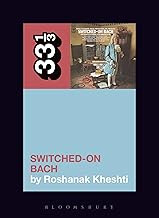
 Wendy Carlos's Switched-On Bach (33 1/3) by Roshanak Kheshti

Switched-On Bach cover

Kheshti’s analysis of the transformational album Switched-On Bach is a great approach to exploring a landmark album like this. Her focus is not only on the fact that this was the first album to use a synthesizer, but also on what a pioneer Carlos is in the field of music in general. Carlos not only became one of the first moog players, but broke boundaries as a woman in the field of classical music. Although Kheshti talks a little about Carlos’s gender identity, she uses this to show how the music industry often subjects women to double standards, questioning their musical skills and placing their gender above their abilities. I had not thought about this album in quite this way, although I have always enjoyed the sounds and this different approach to considering classical music. As someone who grew up with electronic music and synthesizers as a part of popular music, I had not really considered how revolutionary this album was and the possible backlash from musical purists that might have resulted. Kheshti considers these aspects, but also looks at the aesthetics of the album, including its cover, to consider how it has helped to shape our notions of electronic music over the years. Although it might be more academic for some fans of the 33 1/3 series, I really enjoyed this one. 


Saturday, June 21, 2025

A Fun Ride Through the Creation of a Classic

 David Bowie's Low by Hugo Wilcken

Low book cover

I enjoyed Wilcken’s book about the seminal Bowie album Low. Not only was this album important in helping to bring in more electronics in music, but it also presented a strange period in Bowie’s life where he was flirting with the idea of the Thin White Duke and completely strung out on cocaine. It’s amazing that he was able to create this album during the period of artistic chaos. Yet, Wilcken’s book explores some of the events of Bowie’s life that led to the album’s development as well as the stories behind the music and lyrics. I love Bowie’s work, and I think that Wilcken did well zooming in on this particular era of Bowie’s work and how it fits in with his overall body of work. Although Wilcken doesn’t interview Bowie, he does talk with some other members of Bowie’s band and the production crew to give some details about the creation of the album. This was a solid entry into the 33 1/3 library providing useful context and history about this significant album. 


Documenting and Speculating on a Classic Album

Tom Waits' Swordfishtrombones by David Smay

Swordfishtrombones book cover

I read this book over 10 years ago, but for whatever reason, it was not showing up as read in my kindle library. I decided to re-read this one since it is short and about one of my favorite Tom Waits albums. Rain Dogs is probably my favorite, but I like that this one is the album before and it really shows how Waits moved from the singer songwriter to someone more experimental and daring in his musical voice. While I remembered some of the stories about the album, the song writing, and the photo shoot, I forgot what a great writer Smay is. His reporting is enjoyable, and he frequently develops a humorous voice in his writing. I’m glad that I re-read this book. It was as entertaining and enlightening as I remembered. 


Sunday, December 29, 2024

1990s Metal- Body Count's in the House

 Body Count (33 1/3) by Ben Apatoff


Body Count book cover

Author Ben Apatoff

Body Count's in the house

Body Count album cover (Dave Halili art work)


Ben Apatoff’s Body Count is a great addition to the 33 1/3 library. First, there aren’t many of these books about great metal albums. I read the Slayer Reign in Blood, but I don’t think there are many others (It is a great and fun read). Plus, I think many people may not be aware of how controversial Body Count was in the early 90s, nor how revolutionary and kind of unclassifiable they were at the time. Apatoff’s book helps to contextualize Ice-T’s role in popular music, providing a brief biography, and showing how he eventually got involved in music after a brief life of crime. I’ve always loved Ice-T’s music and remember just how hard “Colors” was in 1988. “High Roller” and “6 in the Mornin’” were some other favorites because, as Apatoff notes, Ice was a storyteller, not just a rapper. He was like a poet and writer able to create these characters and stories, often with a kind of dark irony, that were just as appealing as someone I’d read in school like Poe or Shirley Jackson. His were just shorter and set to really great music. I still don’t know what some of the sounds were from “Colors”, but they were really haunting.

Ice-T was also one of the first rappers to really move into movies as well, although I don’t really remember his role in Breakin’. However, I remember when New Jack City came out—both the soundtrack and the movie. Apatoff’s book uses these events to show just how powerful and well-known Ice-T became in the media as someone who not only could popularize a kind of underground form of music (at the time), but also could make movies (and soundtracks—New Jack City, Ricochet, Trespass—some classic 90s films). Needless to say, Ice T was powerful, and people were listening to him. What is surprising, though, is that once Body Count came out, people began to distance themselves from him and his music. Apatoff also helps to contextualize the release of Body Count, providing great details and research about the times and the members of the band. Readers learn that Ice-T was also a fan of rock music, especially Black Sabbath, and he met some other musicians, especially Ernie C, who became the lead guitarist for Body Count, in high school. It was cool to learn that Ice-T, at the height of his power, reconnected with some friends to do some different music that people probably didn’t really expect. It was also brought about by Ernie C’s connection with Perry Farrell, who wanted to record with Sly Stone, but ended up recording his song from Gift with Ice-T, which I always thought was pretty weird. Regardless, this led to a booking on the first Lollapalooza, where Ice T decided to do a show half rap and half metal, with Body Count. It was great to read about this iteration of Lollapalooza, and how the Rollins Band (and probably Jane’s Addiction) influenced Body Count’s music.

The most interesting chapters of the book revisit the book’s first chapter where, in July of 1992, about a year and a half after the Rodney King Beating and about 3 months after the LA Riots, we learn that Ice-T intends to remove the song “Cop Killer” from Body Count’s debut album. It was really interesting to read about the controversy and uproar the album provided in the post-Rodney King video world of music. While some metal groups from the 80s faced scrutiny over their lyrics, it seemed like rap music in particular was in the crosshairs of conservative activists who were certainly not advocating for free speech. Taking the music literally, critics on both sides of the major parties like Dan Quayle and Tipper Gore took umbrage at Ice-T’s song, failing to recognize the criticism it leveled in how African Americans had been and continued to be brutalized by newly militarized police forces. Furthermore, they often failed to connect the lyrics of Body Count to Ice-T’s other music. Nevertheless, reading these criticisms today, where terms like “Black Lives Matter” and “Critical Theory” spark such outrage among supposed free speech advocates is a reminder of the utter hypocrisy that has been a large part of American politics. It’s not about furthering rights of all, but rather putting on a show for constituents, and often using fear-mongering, creating enemies and others to create a common enemy. As Ice-T’s earlier album would claim, Freedom of Speech…Just Watch What you Say!

The other chapters in this book explore the creation of the album There’s a brief chapter at the end that runs through all of the songs on the album and provides quotes from Ice-T and Ernie C about how these songs developed, and it’s worth the read, especially for Ice’s remembrances (or non-remembrances) of some of the songs. I also liked learning about the different punk and thrash metal bands that influenced Body Count, like Suicidal Tendencies, who I always thought sounded a lot like Body Count, not musically, but more like thematically/lyrically, DRI, and even Living Colour, who were part of the Black Rock Coalition, but didn’t really include Body Count in it. There’s another chapter that focuses on how Ice-T and Ernie C resurrected the band after a few failed albums that followed their debut. I remember hearing about some of the albums and learning about the different influences that Body Count had on newer, younger metal bands. Apatoff used a quote from Laina Dawes, whose book I’ve been meaning to read, to explain how Body Count were metal, but also funky. Ernie C’s guitar work has that kind of funk sound to it, where there’s some of the influence of P-Funk’s Eddie Hazel. A lot of times, these 33 1/3 books have a kind of tragic ending or we learn that the band never made more albums, but this one classic album remains influential. This book was different, and I loved seeing how the band came back and were still relevant. Although the social problems like racism, violence, and drugs are still around, it’s great to have a band like Body Count to document and criticize it in their own thrilling way. Part anger, part humor, all metal—Body Count is in the house!

One final note about Apatoff’s writing—I loved how he documented nearly everything from his research. Sometimes these books don’t include citations and documentation of their sources, but Apatoff’s research and extensive bibliography of books, podcasts, videos and articles has provided me with some great follow up reading! Many thanks!